English
 العربية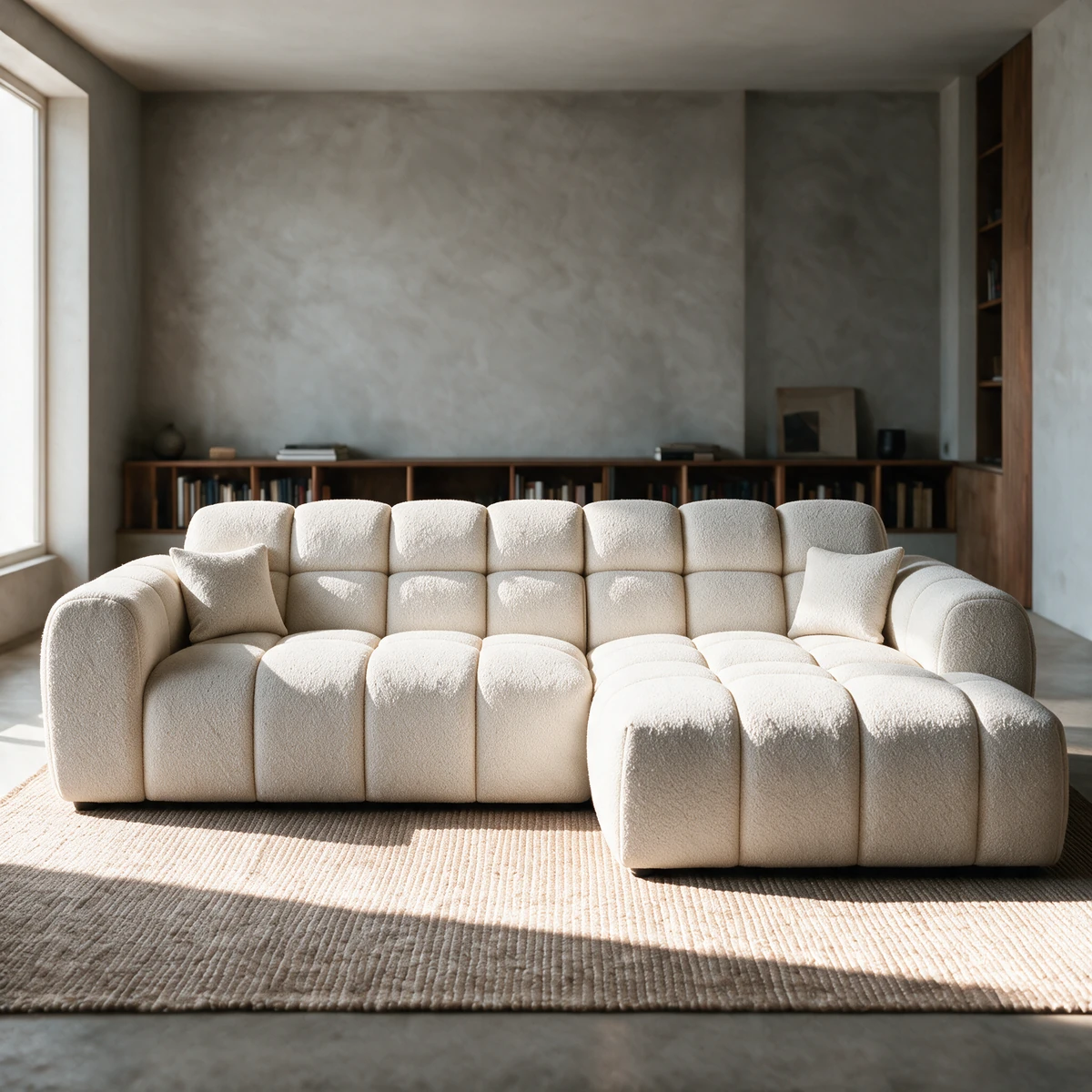
How to arrange cushions on a sofa: easy rules that always work
Cushions are the quickest way to change the look of a sofa. How many to use, which sizes, and five simple arrangements for 2-seaters, 3-seaters, corners and U-shapes.
The short answer
To arrange cushions on a sofa, start at the arms and work towards the middle: place the largest cushions in each corner, then smaller or lumbar cushions in front of them, and leave the middle seat partly free. A 2-seater usually looks best with 2 to 4 cushions, a 3-seater with 3 to 5 and a corner sofa with 5 to 7. Use cushions in at least two sizes, keep to two or three colours taken from the room, and mix one plain, one textured and one patterned design.
| 2-seater | 2 to 4 cushions |
|---|---|
| 3-seater | 3 to 5 cushions |
| Corner or U-shape | 5 to 9 cushions |
| Most common square size | 45 × 45 cm |
| Comfo seat depth | 74 cm |
In this guide
How many cushions does your sofa need?
Enough to look generous and feel comfortable, but never so many that you have to move them before you sit down. A useful guide:
| Sofa | Number of cushions | A layout that works |
|---|---|---|
| 2-seater | 2 to 4 | One or two in each corner |
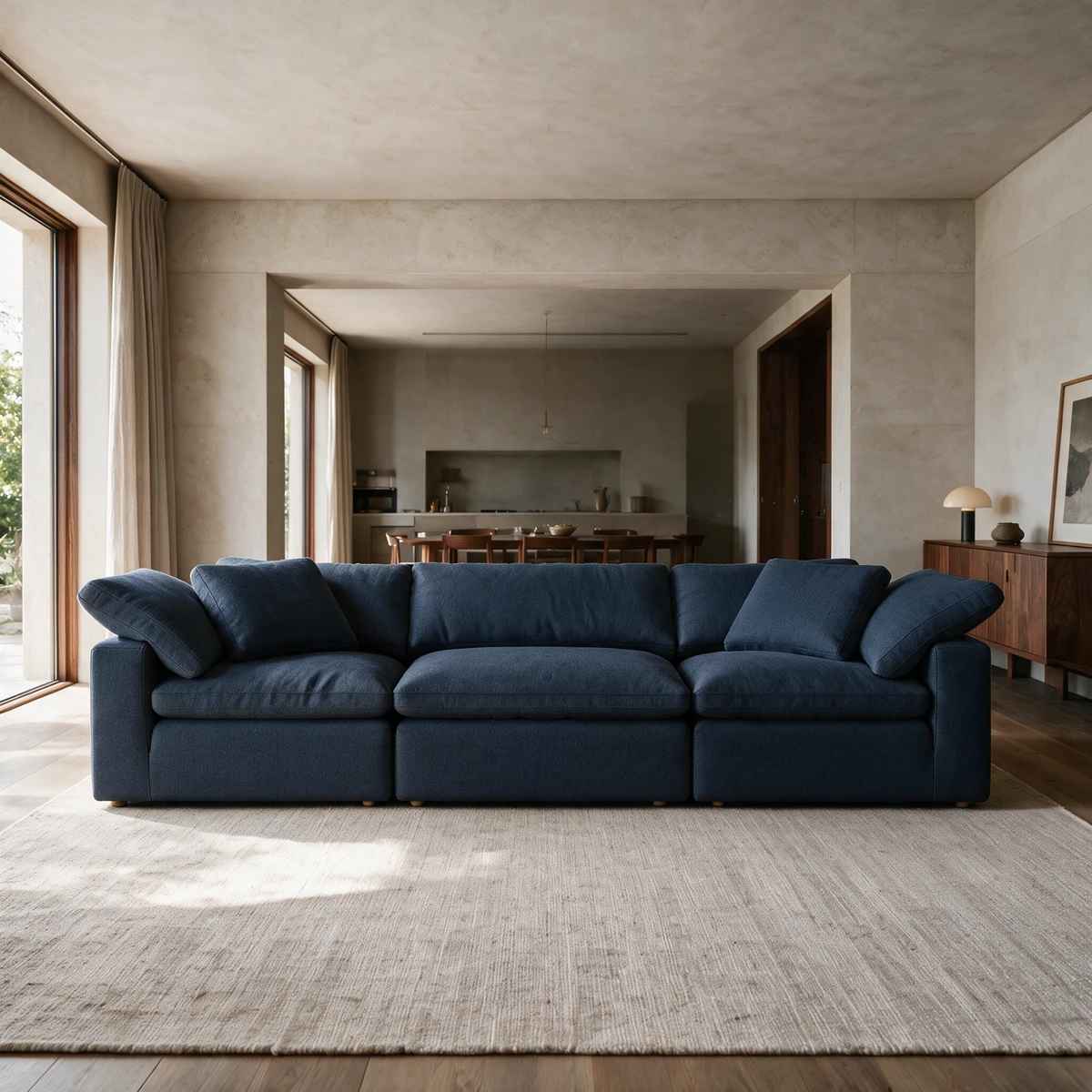
| 3-seater | 3 to 5 | Two in each corner, one lumbar in the middle |
| Corner or chaise sofa | 5 to 7 | Two at each end, two or three to fill the corner |
| U-shape or majlis | 6 to 9 | A pair at each end, a few along the back |
Odd or even? Even numbers in matching pairs look calm, formal and symmetrical. Odd numbers, such as three or five, look relaxed and collected. Both work; pick the mood you want for the room.
Cushion sizes: which ones to choose
- 45 × 45 cm: the most common square cushion, right for most 2-seaters and compact sofas.
- 50 × 50 cm: a little more generous, good on a 3-seater.
- 55 × 55 or 60 × 60 cm: for deep, low and large sofas, corners and U-shapes. Smaller cushions can look lost on them.
- Lumbar, about 30 × 50 or 35 × 60 cm: a long, low cushion that supports the lower back and finishes the front of an arrangement.
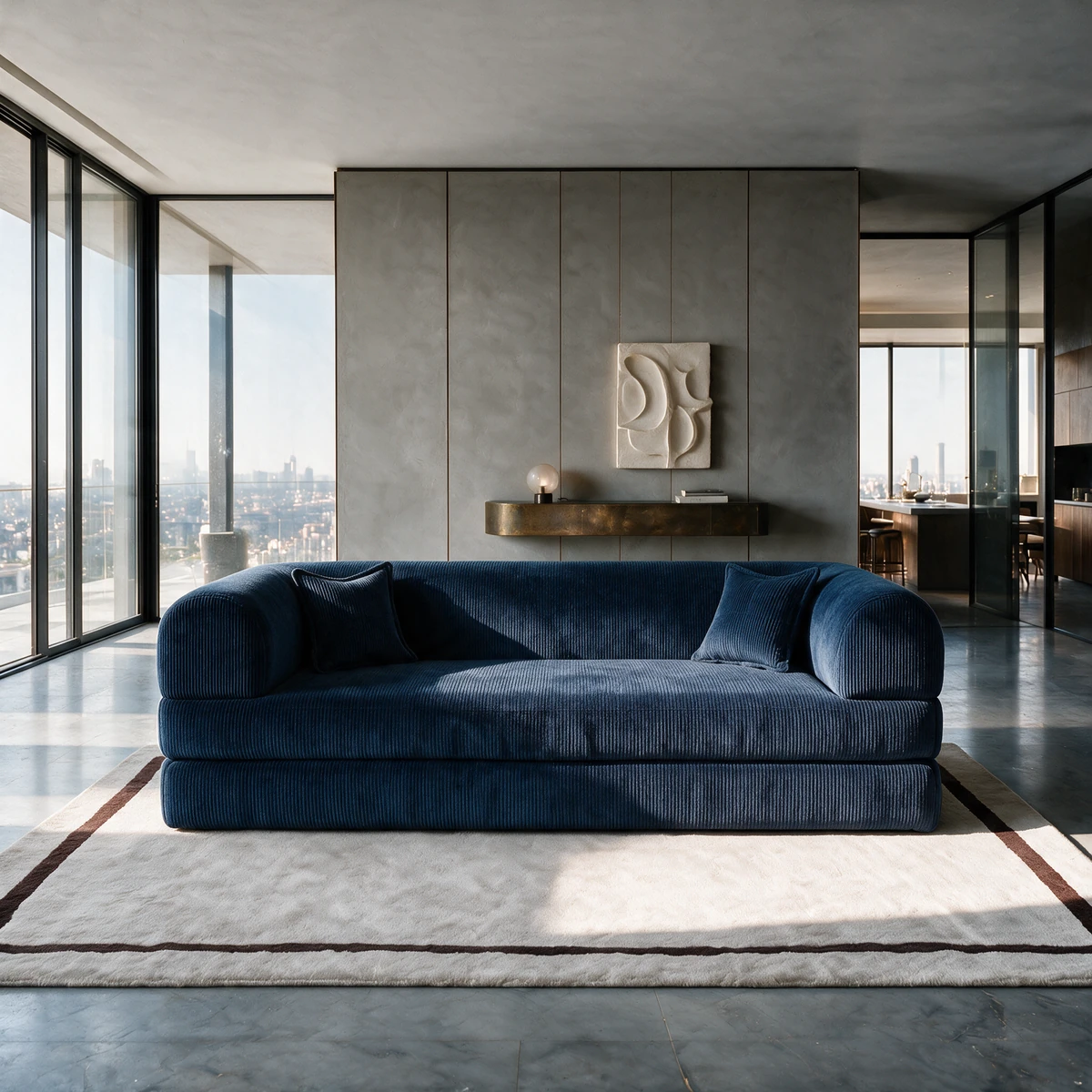
A simple rule: the deeper the seat, the bigger the cushions. Comfo has a 74 cm seat depth, so 55 or 60 cm squares look in proportion and help shorter guests sit a little more upright. A compact sofa such as Brioche, 206 cm wide, suits 45 cm cushions, and it comes with two matching cushions in the same fine corduroy.
Five cushion arrangements that always work
- The mirror: the same pair in each corner, for example a large plain and a smaller pattern. Calm, classic and very easy.
- Two, two and one: two cushions in each corner and one lumbar cushion in the middle. The most popular layout for a 3-seater.
- Three and one: three cushions layered in one corner, from large at the back to small at the front, and a single cushion in the other. Relaxed and modern.
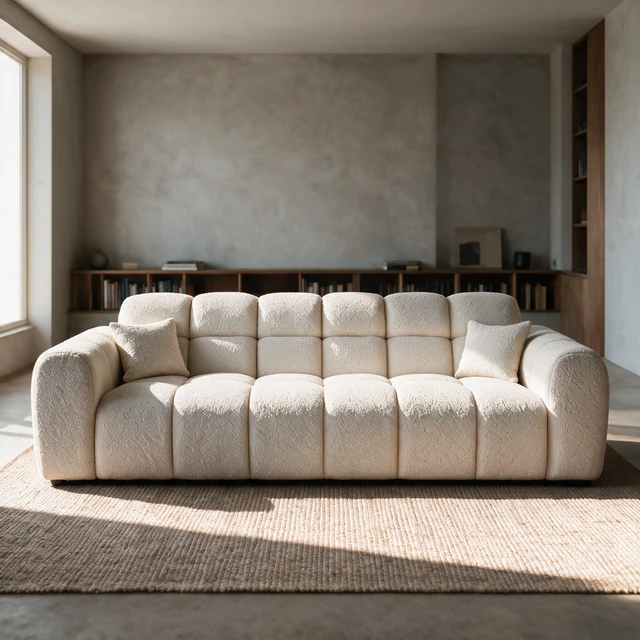
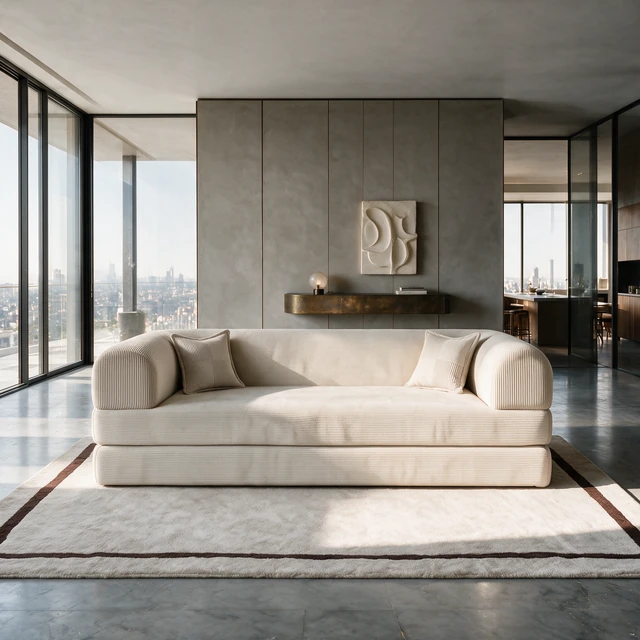
- The minimal pair: just two large cushions, one in each corner, in a texture rather than a pattern. Perfect for a sculptural sofa or a very small room.
- The layered corner: on a corner sofa, the largest cushions placed where the two sides meet, then pairs at each end. The corner becomes the most inviting seat.
Always place the largest cushions at the back and the smallest at the front, and stand back from across the room to check the balance before you finish.
Colours and patterns: the three-cushion formula
For a set that always looks planned, combine three types of cushion:
- A plain one close to the sofa colour or the walls, for calm.
- A textured one, in bouclé, wool, linen or velvet, for depth.
- A patterned one, in stripes, checks or a soft print, for character.
Take the colours from the room rather than from the sofa alone: the rug, the curtains, a painting or even a plant. When mixing patterns, change the scale, one large and one small, and keep one colour common to both. Our guide on matching your sofa with the rug, curtains and cushions explains how to build that colour story.
| Sofa colour | Calm cushions | Warm cushions |
|---|---|---|
| Biscuit or Chalk | Oatmeal, cream, sand | Rust, olive, camel |
| Olive | Cream, stone | Terracotta, mustard |
| Dark Navy or Indigo | Cream, pale grey | Rust, camel, burnt orange |
| Terracotta | Cream, blush | Olive, deep green |
Corner, chaise and U-shape sofas
Larger sofas need a little more thought, because they have more corners and longer straight stretches.
- Corner sofas: start where the two sides meet. Two large cushions there make the corner seat the most comfortable one. Then add a pair at each end.
- Chaise sofas: keep the chaise mostly free so you can stretch out, with one cushion at its back and a lumbar for reading.
- U-shapes and majlis layouts: keep both ends symmetrical so every guest sees the same welcome, and add one or two cushions along the long back.
- Modular sofas: when you move the modules, move the cushions with them. A cushion at each end of a group shows where one seating area stops and the next begins.
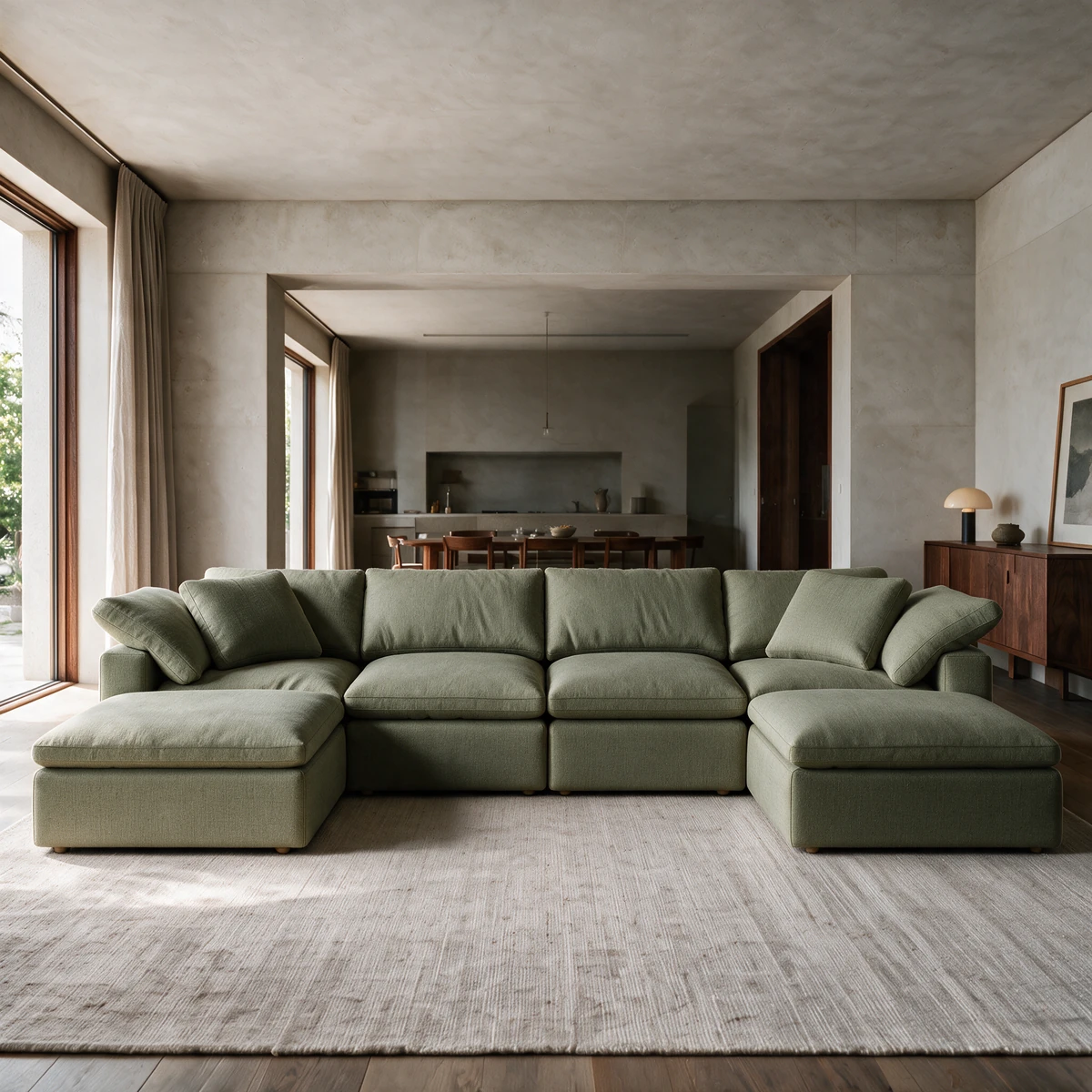
Comfo is fully modular, from a 2-seater to a U-shape, so you can change the shape of the sofa and the cushion layout together whenever you rearrange the room.
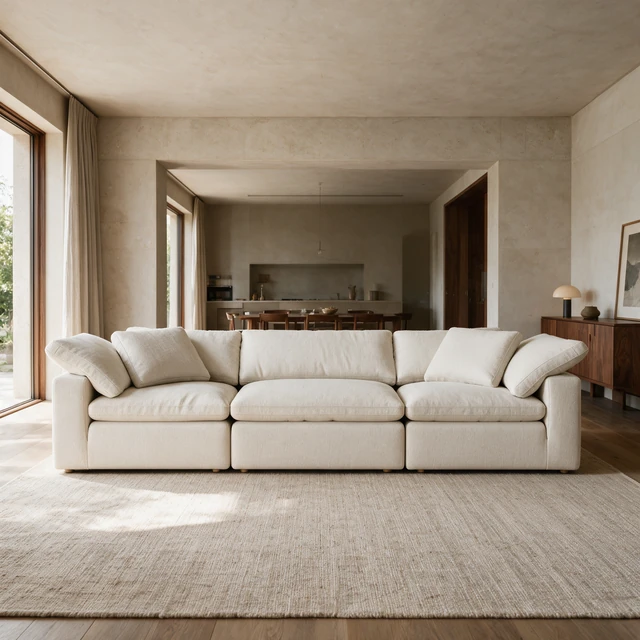
Comfo, the fully modular sofa: deep, soft seats that look generous with large cushions, in a shape you can change as often as your cushion layout, from AED 7,490.
From AED 7,490 · delivered and installedPlump, chop or leave soft?
How a cushion looks depends a lot on what is inside it. A common rule is to choose an insert about 5 cm larger than the cover: the cushion looks full and keeps its shape. Feather inserts look soft and relaxed and take a neat dent; fibre inserts stay round and bouncy.
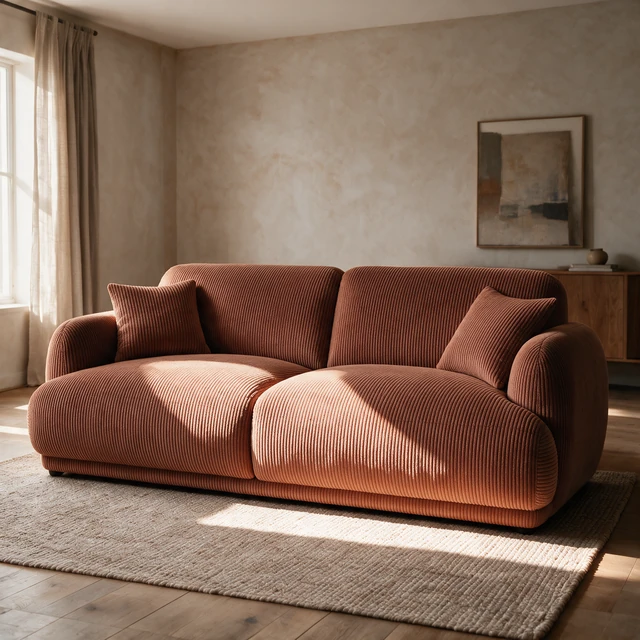
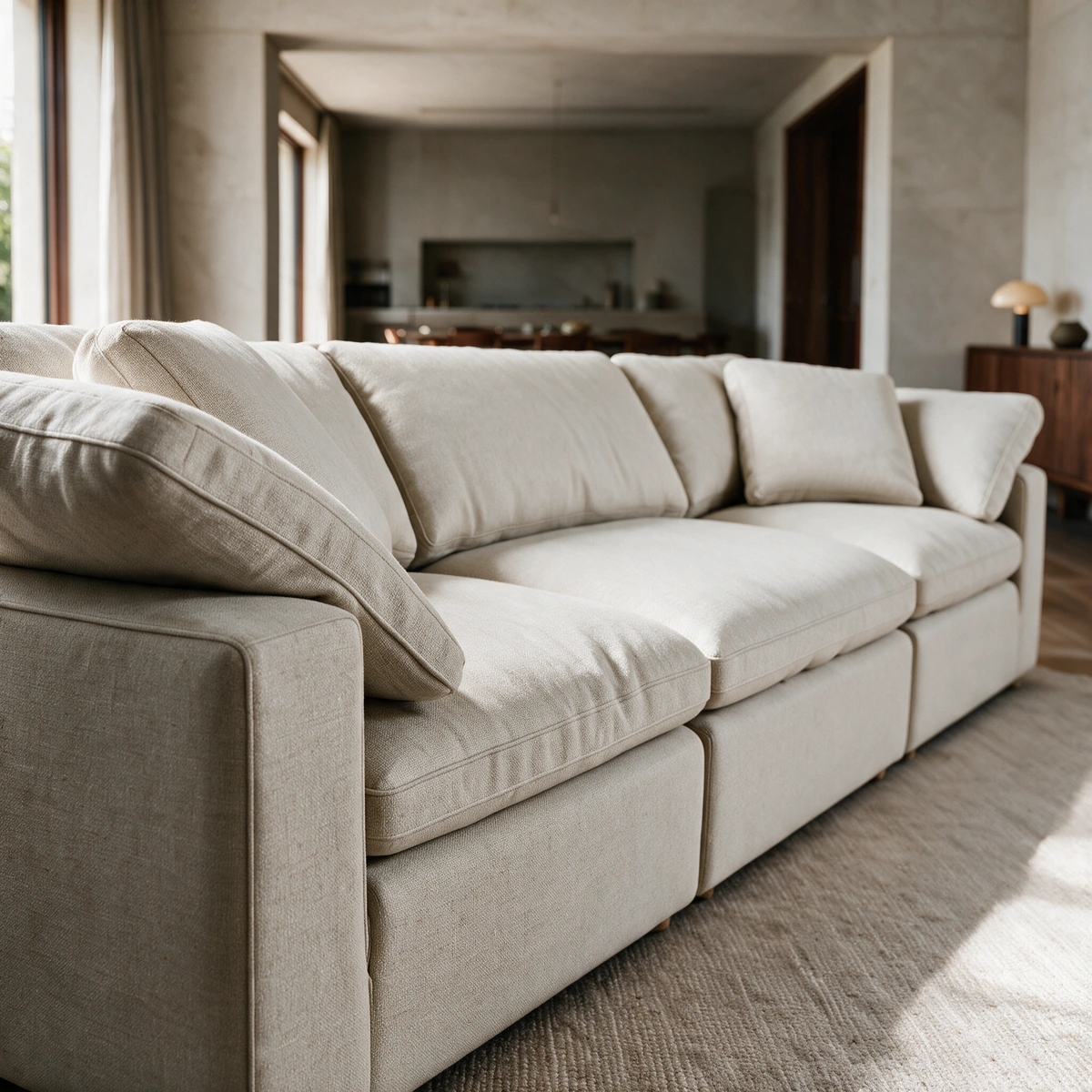
The famous "chop", a little dent on top of each cushion, is a matter of taste. It suits a formal, hotel-like room. For a relaxed family living room, simply plump each cushion between your hands and set it down at a slight angle against the back or the arm, as on the sofa in the photo above.
Give the cushions a quick plump every day and wash or air the covers regularly, especially in dusty months, and they will always look fresh.
Change your cushions with the seasons and occasions
Cushion covers are the easiest way to give a room a new mood without changing anything else.
- Summer: light linen and cotton in cream, sand and soft blue feel cool even when it is 45°C outside.
- Winter evenings: from December to February, wool, velvet and knitted covers in rust, olive and camel make the room cosy.
- Ramadan and Eid: deep greens, golds and creams with a touch of shine; our guide to hosting for Ramadan and Eid has more ideas.
- UAE National Day: a few cushions in the colours of the flag, red, green, white and black, for a festive touch on 2 December.
Keep the inserts and change only the covers: storing two or three sets takes very little space.
Questions, answered
Should you have an odd or even number of cushions on a sofa?
Both work. Even numbers in matching pairs give a calm, symmetrical look, while odd numbers such as three or five feel relaxed and collected. Choose the mood you want for the room.
What size cushions suit a deep sofa?
Large squares of 55 × 55 or 60 × 60 cm look in proportion on a deep, low sofa and help shorter people sit more upright. Add a lumbar cushion for the lower back.
Should cushions match the sofa?
One cushion close to the sofa colour gives depth, but the others look best in colours taken from the rug, the curtains or the art. That links the sofa to the rest of the room.
Where do you put cushions on a corner sofa?
Start with two large cushions where the two sides meet, then add a pair at each end. On a chaise, keep the long seat mostly free so you can stretch out.