English
 العربية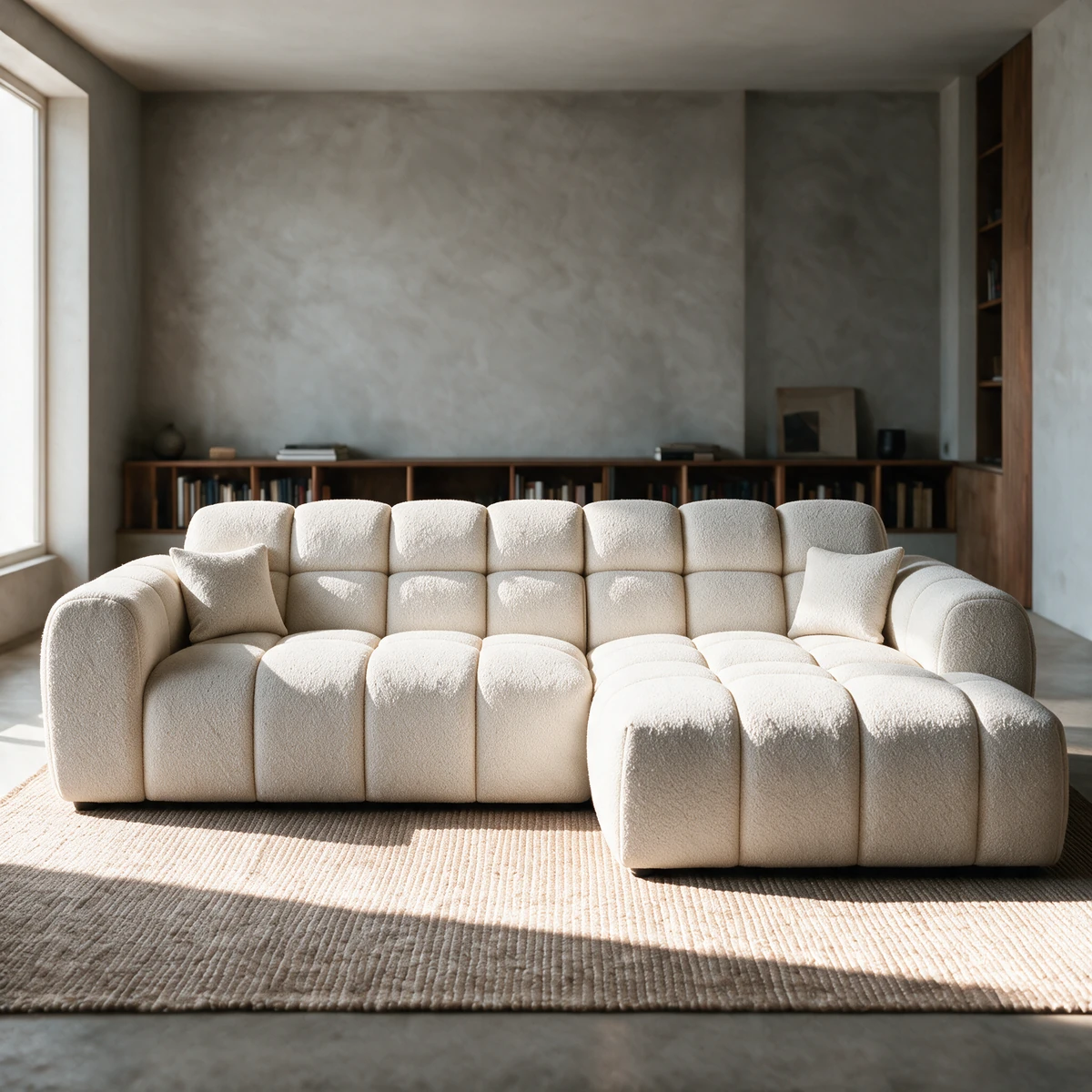
How to remove common stains from a sofa: coffee, oud oil, ink
Most stains come out if you act fast and gently. The first minute, a small stain kit, and step-by-step methods for the spills UAE homes know best.
The short answer
To remove stains from a sofa, act fast: lift any solids, blot with a clean white cloth from the outside in, and never rub or use hot water. Then treat by type: coffee and tea with cool water and a drop of washing-up liquid, oud oil with an absorbent powder first and mild detergent after, and ballpoint ink with a little rubbing alcohol on a cotton bud. Always check the cleaning code on the care label (W, S, WS or X) and test on a hidden spot before using any product.
| First move | Blot, never rub |
|---|---|
| Water temperature | Cool, never hot |
| Oily stains (oud, perfume oil) | Absorbent powder first |
| Ballpoint ink | Rubbing alcohol, dabbed, after a test |
| Cleaning code X | No liquids: call a professional |
In this guide
- The first minute: what to do with any spill
- A small stain kit worth keeping at home
- How to remove coffee and karak tea stains
- How to remove oud oil, perfume oil and bakhoor soot
- How to remove ink from a sofa
- Stain by stain: a quick reference
- Stain removal on bouclé, corduroy and smooth weave
- When to call a professional cleaner
The first minute: what to do with any spill
- Lift solids with a spoon or a blunt knife, scooping towards the centre.
- Blot with a clean, white, dry cloth or kitchen paper. Press, lift, move to a clean part of the cloth, and repeat.
- Work from the outside in, so the stain does not spread.
- Do not rub. Rubbing pushes the stain deeper and roughs up loops and pile.
- No hot water. Heat can set stains, especially milk and other proteins.
- Check the label before adding anything: the cleaning code tells you whether water or solvent is allowed.
Spills blotted in the first few minutes usually leave far less trace than those left overnight or rubbed hard. Speed and a light touch matter more than any product.
A small stain kit worth keeping at home
- White microfibre cloths or plain white towels; coloured cloths can transfer dye.
- Clear, unscented washing-up liquid.
- A spray bottle of distilled water.
- Isopropyl rubbing alcohol and cotton buds.
- Cornflour or bicarbonate of soda, for oily stains.
- A soft brush, for corduroy and for lifting dried powder.
- A dry cleaning sponge, sometimes sold as a soot sponge, for smoke and dry dirt.
Keep everything in one box in a kitchen cupboard. When a spill happens, the minutes spent looking for a cloth are the ones that count. Before using any product for the first time, test it on a hidden spot, such as the back or the underside, and let it dry fully.
How to remove coffee and karak tea stains
Black coffee and plain tea are among the easier stains if you act quickly.
- Blot up as much as you can.
- Mix a few drops of clear washing-up liquid into a cup of cool water.
- Dampen a white cloth, dab the stain from the outside in, then blot dry.
- Rinse by dabbing with a cloth dampened in plain water, and blot again.
Karak, latte and milky tea add milk and sugar. Milk protein sets with heat, so use only cool water, and rinse well: sugar left in the fabric stays sticky and attracts dust. If a faint brown shadow remains once dry, repeat the detergent step once more rather than scrubbing harder.
On a fabric coded S, skip the water and use a water-free upholstery solvent, following its instructions.
How to remove oud oil, perfume oil and bakhoor soot
Oud oil and other perfume oils are oily stains, and water alone will only spread them. Deal with the oil first, then the mark.
- Blot gently to remove any oil still sitting on the surface.
- Cover the stain with a layer of cornflour or bicarbonate of soda and leave it for 20 to 30 minutes to draw the oil out.
- Brush the powder off gently and vacuum the rest.
- If the code allows water, dab with a cloth dampened in cool water and a drop of washing-up liquid, which breaks down grease, then rinse by dabbing and blot dry.
- Repeat the powder step if a darker patch remains.
Spray perfumes contain alcohol, which can lift or change some dyes, so spray before you sit down and away from the sofa.
Bakhoor soot and smoke film are dry, greasy particles. Do not wet them first: water turns soot into a smear. Vacuum with a brush nozzle held just above the fabric, then wipe lightly with a dry cleaning sponge. And keep the burner well away from upholstery, for the fabric's sake and for safety.
How to remove ink from a sofa
Ballpoint ink is oil-based and usually responds to alcohol, if your code allows solvent cleaning (S or WS).
- Test the rubbing alcohol on a hidden spot and wait for it to dry.
- Dab a cotton bud dipped in alcohol on the ink line, without rubbing.
- Blot with a clean white cloth; the ink should transfer to the cloth.
- Change buds and cloth areas often, so you do not put ink back.
- Finish with a cloth dampened in water and a drop of washing-up liquid if the code allows water, then blot dry.
Washable felt tips are water-based: cool water and a little detergent usually take them out. Permanent marker and gel ink are harder, and on a pale fabric they are often a job for a professional. Never use nail polish remover or bleach on upholstery: they can dissolve some fibres and strip colour.
Stain by stain: a quick reference
| Stain | First move | Then | Avoid |
|---|---|---|---|
| Coffee, tea, karak | Blot | Cool water and mild detergent | Hot water |
| Oud or perfume oil | Blot, then powder for 20 to 30 minutes | Mild detergent to lift the mark | Water first |
| Bakhoor soot | Vacuum without touching | Dry cleaning sponge | Wetting it |
| Ballpoint ink | Test, then alcohol on a cotton bud | Mild detergent rinse | Rubbing |
| Chocolate | Let it harden, lift it off | Cool water and mild detergent | Heat |
| Curry, turmeric, saffron | Scoop and blot at once | Mild detergent, repeated gently | Spreading it with a wet cloth |
| Juice, laban, sweet drinks | Blot | Cool water and mild detergent | Leaving sugar in the fabric |
| Makeup, kohl | Lift with a dry cloth | Mild detergent, or alcohol on a bud if solvents are allowed | Rubbing it in |
| Pet accidents | Blot thoroughly | An enzyme cleaner made for upholstery | Ammonia-based cleaners |
Turmeric and saffron are strong natural dyes, and on light fabrics a faint yellow can remain. A professional cleaner has more options than you do at home.
Stain removal on bouclé, corduroy and smooth weave
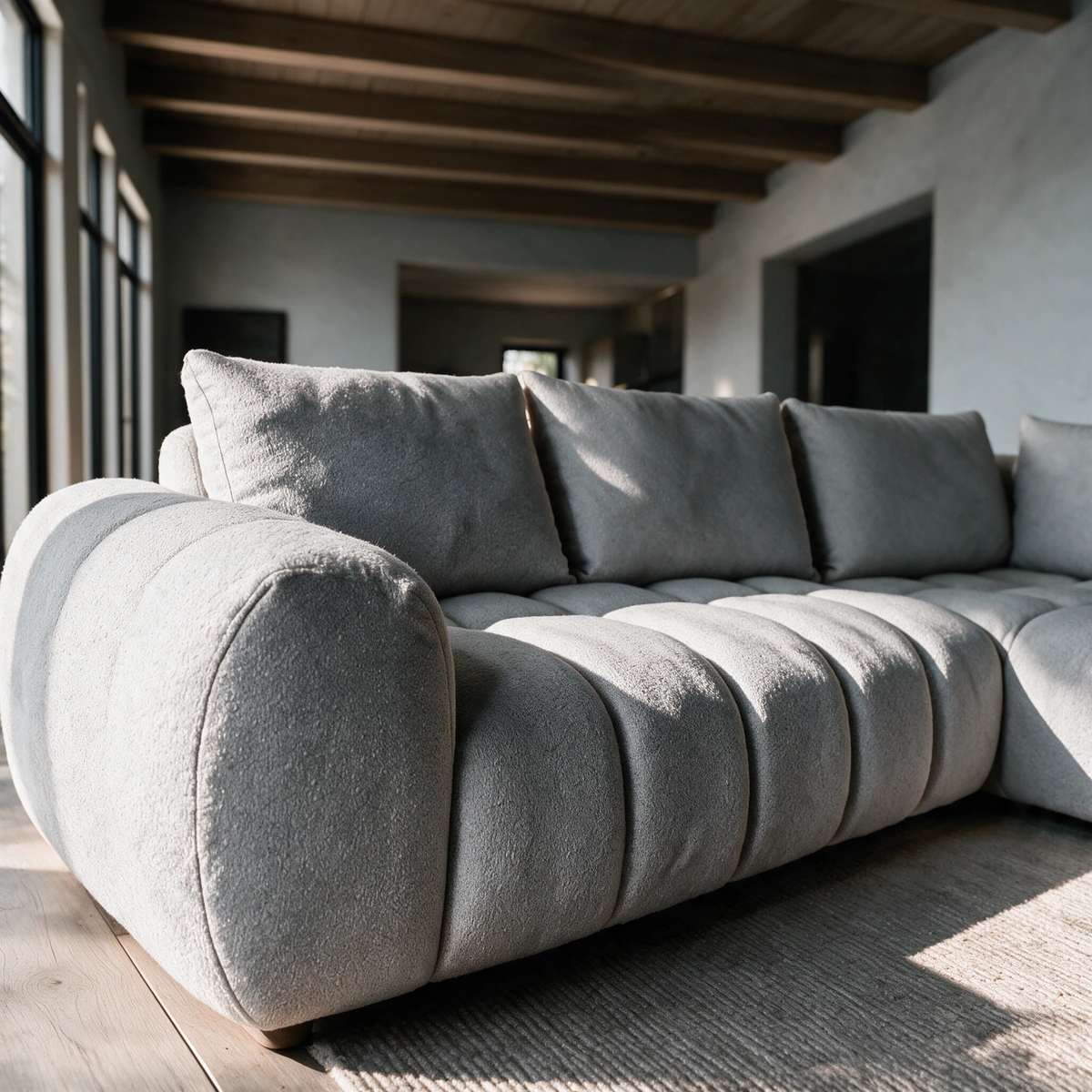
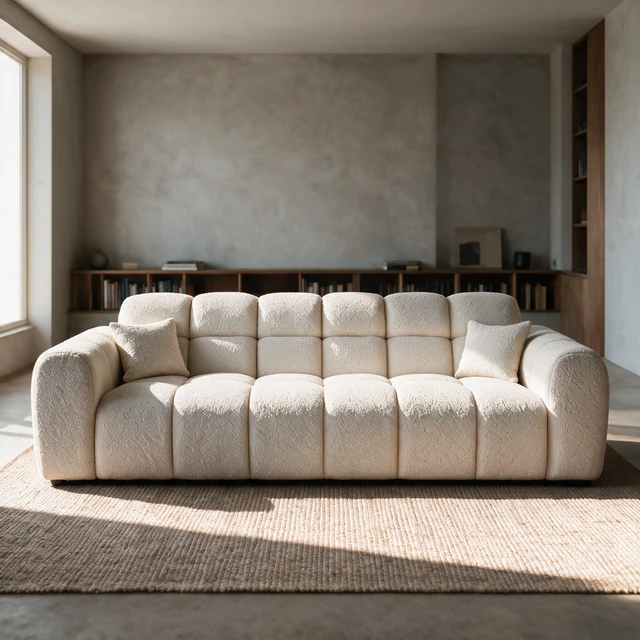
- Bouclé: dab, never scrub, or the loops fluff up and pill. Use as little liquid as possible, because loops hold moisture. Let it dry, then lift the texture gently with your fingertips.
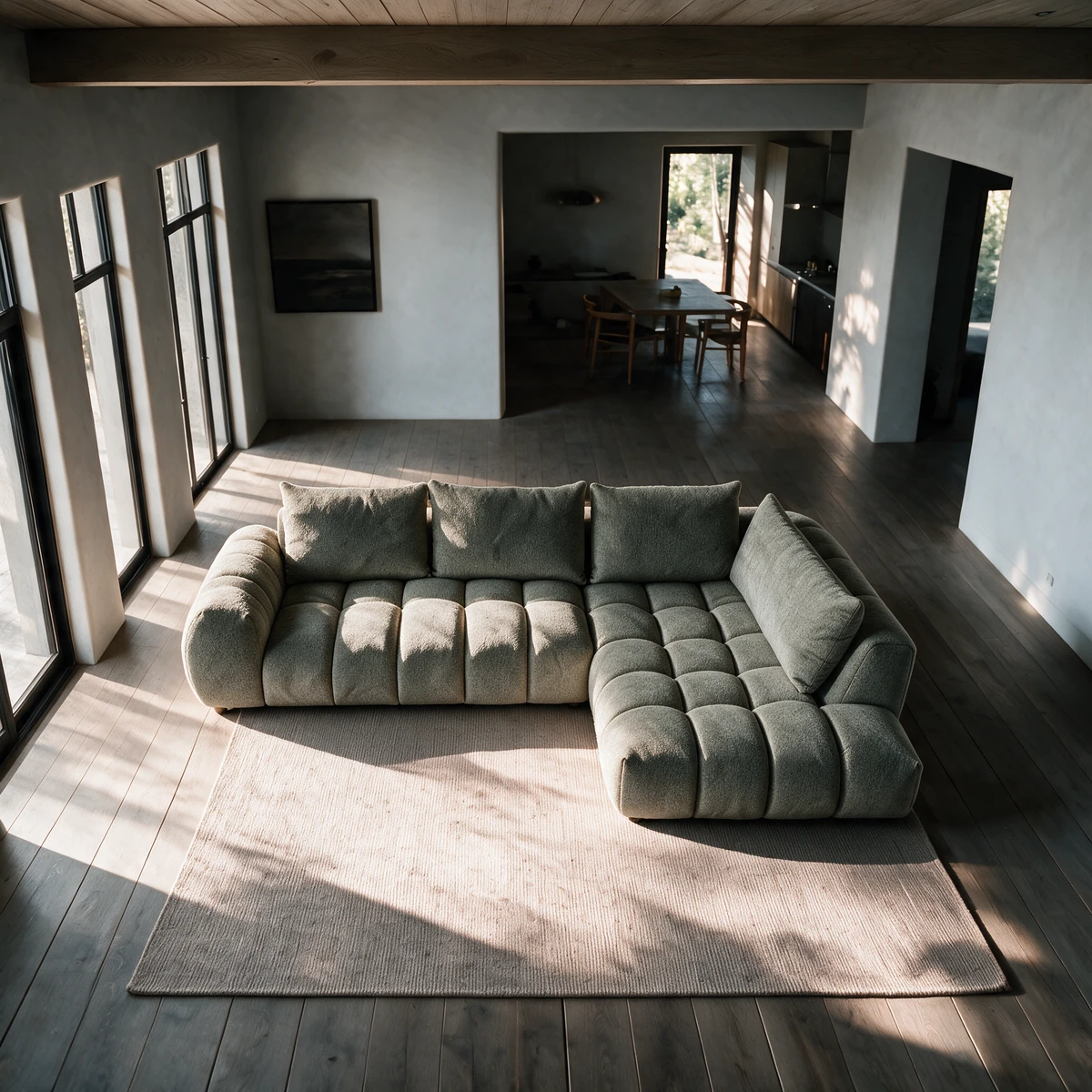
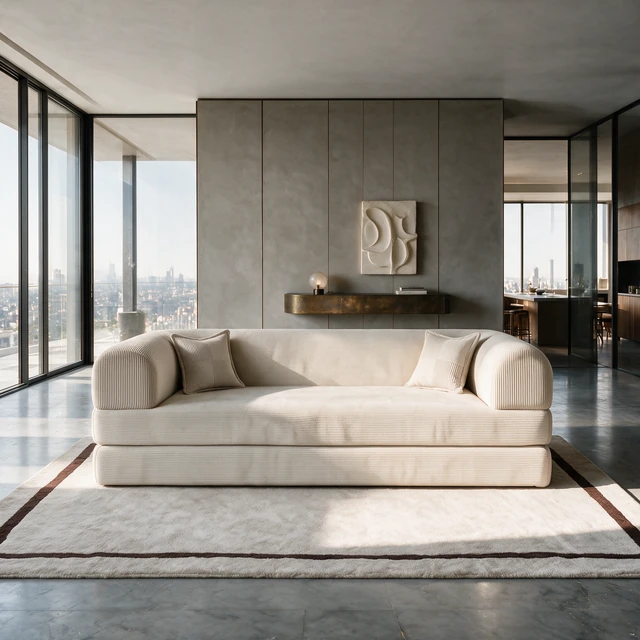
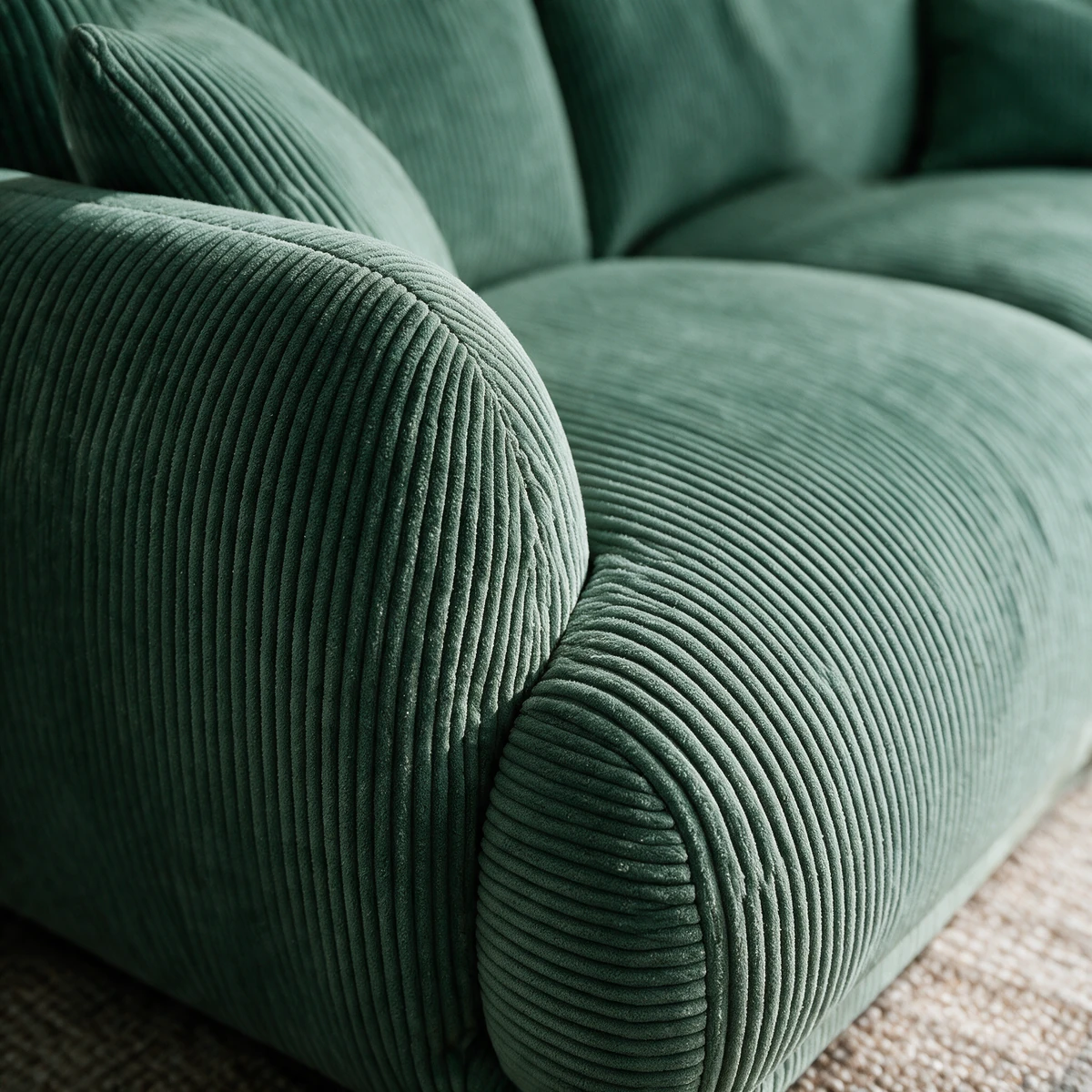
- Corduroy: blot and dab along the ribs, not across them. Once fully dry, brush the pile in its natural direction with a soft brush, so the cleaned area does not look flatter than the rest.
- Smooth weave: the easiest. Most spills stay on the surface for a moment, so quick blotting often removes everything. Feather the edges of any damp area to avoid a ring.
Our fine-corduroy Brioche and Snoozo follow the corduroy rules, and our bouclé Nuage follows the bouclé ones.
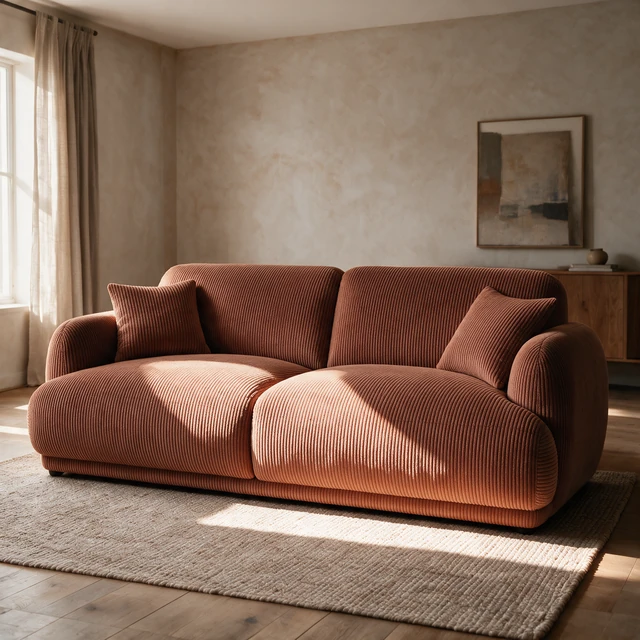
Brioche is our compact, rounded 2-seater in fine corduroy, 206 cm wide, a fabric you can blot along the ribs and brush back up. From AED 3,490.
From AED 3,490 · delivered and installedWhen to call a professional cleaner
- The cleaning code is X, or there is no label.
- The stain is large, old or of unknown origin.
- It is permanent marker, pomegranate or berry juice on a pale fabric, or a strong dye such as turmeric.
- Your first attempt left a ring or a lighter patch.
Tell the cleaner what the stain is and what you have already tried. For regular care beyond stains, see our guide on how to clean a sofa in the UAE.
Questions, answered
Does vinegar remove sofa stains?
Diluted white vinegar is sometimes used on water-based stains and smells, but it is acidic and can affect some dyes and finishes. Test it on a hidden spot first, and never use it on a fabric coded S or X. Mild washing-up liquid in cool water is a gentler first choice.
Can I use bicarbonate of soda on my sofa?
Yes, dry, as an absorbent for oily stains and to freshen fabric. Sprinkle it on, leave it for 20 to 30 minutes, then brush and vacuum it off thoroughly. On dark fabrics, check that no white residue stays in the pile.
Will rubbing alcohol damage my sofa?
Used sparingly on a cotton bud, rubbing alcohol is safe on many fabrics that accept solvents, but it can lift some dyes. Always test it on a hidden spot and let it dry before treating a visible area, and do not use it on a fabric coded W only or X.
How do I remove a water ring from a sofa?
Lightly dampen the whole area around the ring with distilled water on a white cloth, working outwards well beyond the mark, then blot firmly and let it dry evenly in a cool room. If the ring stays, a professional cleaner can treat the whole panel.