English
 العربية
Will your sofa fade in the sun? Protecting fabric near big windows
Big windows are one of the joys of UAE homes, and one of the toughest tests for a sofa. Why fabric fades, and how to keep its colour.
The short answer
Yes. Sofa fading in the sun affects every fabric over time, and it happens faster in the UAE, where summer UV levels are very high and living rooms often have large windows. Ordinary window glass stops most UVB but lets through much of the UVA and visible light, and both break down dyes. To protect your sofa, choose a fabric with a light fastness grade of 6 or more on the 1 to 8 scale, prefer light colours near windows, and keep the sofa out of direct afternoon sun with sheer curtains or blinds.
| Light fastness to look for | Grade 6 or more (scale 1 to 8) |
|---|---|
| Window glass | Stops most UVB, lets through much UVA |
| Toughest windows | West-facing, in the afternoon |
| Fades least visibly | Light, warm neutrals |
| Snoozo sofa bed | 190 × 90 cm |
In this guide
Why sofa fabric fades in the sun
Fading is a chemical change. The molecules that give a dye its colour absorb light energy, and over time that energy breaks them apart, so the fabric reflects less colour. Ultraviolet light does the most damage per hour, but visible light fades fabric too, and heat speeds the process up.
That is why window glass only partly helps. Standard glass blocks most UVB but lets through a large share of UVA and nearly all visible light. A sofa behind a closed window still fades, just more slowly than it would outdoors.
Fading is usually uneven. The arm and seat nearest the window, or the top of the back cushions, lose colour first, and many people only notice it the day they lift a cushion and see the original shade underneath.
Why fading happens faster in UAE homes
- Very high UV. In summer, the midday UV index in the UAE regularly reaches the very high and extreme bands, 8 and above.
- Long, clear days. With so few cloudy days, the sun works on fabric almost every day of the year.
- Big glazing. Apartments and villas often have floor-to-ceiling windows and glass doors, so sun reaches deep into the living room.
- West-facing rooms. Low, hot afternoon sun shines almost straight in, for hours, all year round.
- Winter sun. When the sun sits lower in winter, it reaches further into south-facing rooms than in summer, onto a sofa that was in the shade in July.
Before deciding where the sofa goes, watch where the patches of sun fall in your room in the afternoon, and remember that they move with the seasons. A simple test: on a sunny day, mark the edge of the sun patch on the floor with a strip of masking tape every hour from lunch until sunset. Anything inside those lines catches direct light, and in winter the patch reaches even further into the room.
Light fastness: the grade that predicts fading
Fabric makers measure resistance to fading with a light fastness test. A piece of the fabric is exposed to a lamp that imitates daylight through glass, next to eight blue wool reference cloths that fade at known rates. The grade is the number of the reference that faded about as much as the fabric.
| Grade | Resistance to fading | Where it suits |
|---|---|---|
| 1 to 3 | Low | Not recommended for upholstery in daylight |
| 4 | Moderate | Rooms with little direct sun |
| 5 | Good | Most living rooms |
| 6 | Very good | Bright rooms with big windows |
| 7 to 8 | Excellent | Glass rooms and very sunny spots |
Each step on the scale means the fabric can take roughly twice as much light before fading as the step below, so grade 6 lasts far longer than grade 4, not just a little longer. For sunny UAE rooms, look for grade 6. Our article on reading fabric grades explains the test in more detail.
Which fabrics and colours fade least
The fibre and the way it is dyed matter as much as the grade:
- Solution-dyed synthetics, where the colour is added before the fibre is spun, resist fading best, because the colour runs right through.
- Polyester and acrylic dyed after spinning generally hold colour better than natural fibres.
- Cotton and linen fade more readily, and silk is the most sensitive of all.
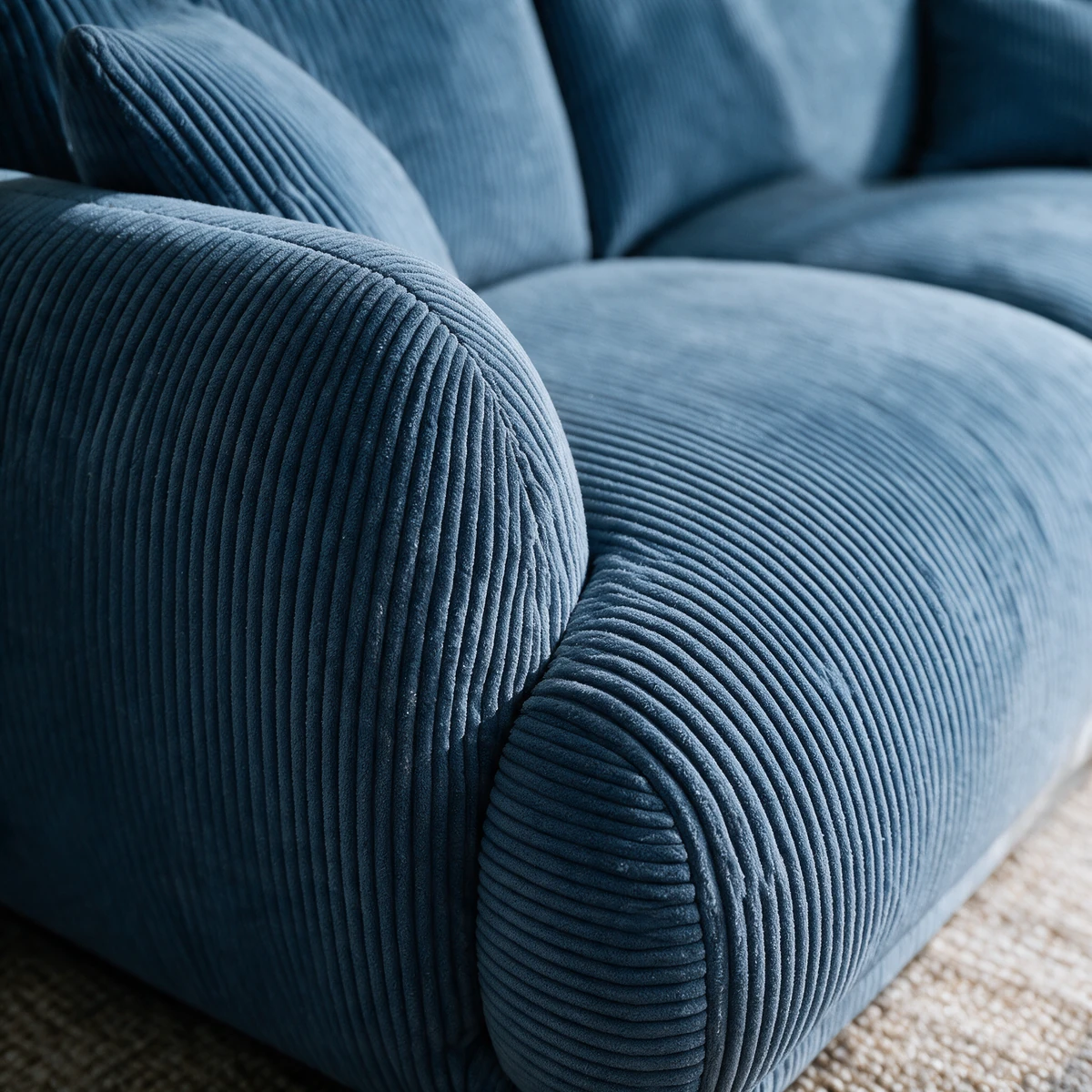
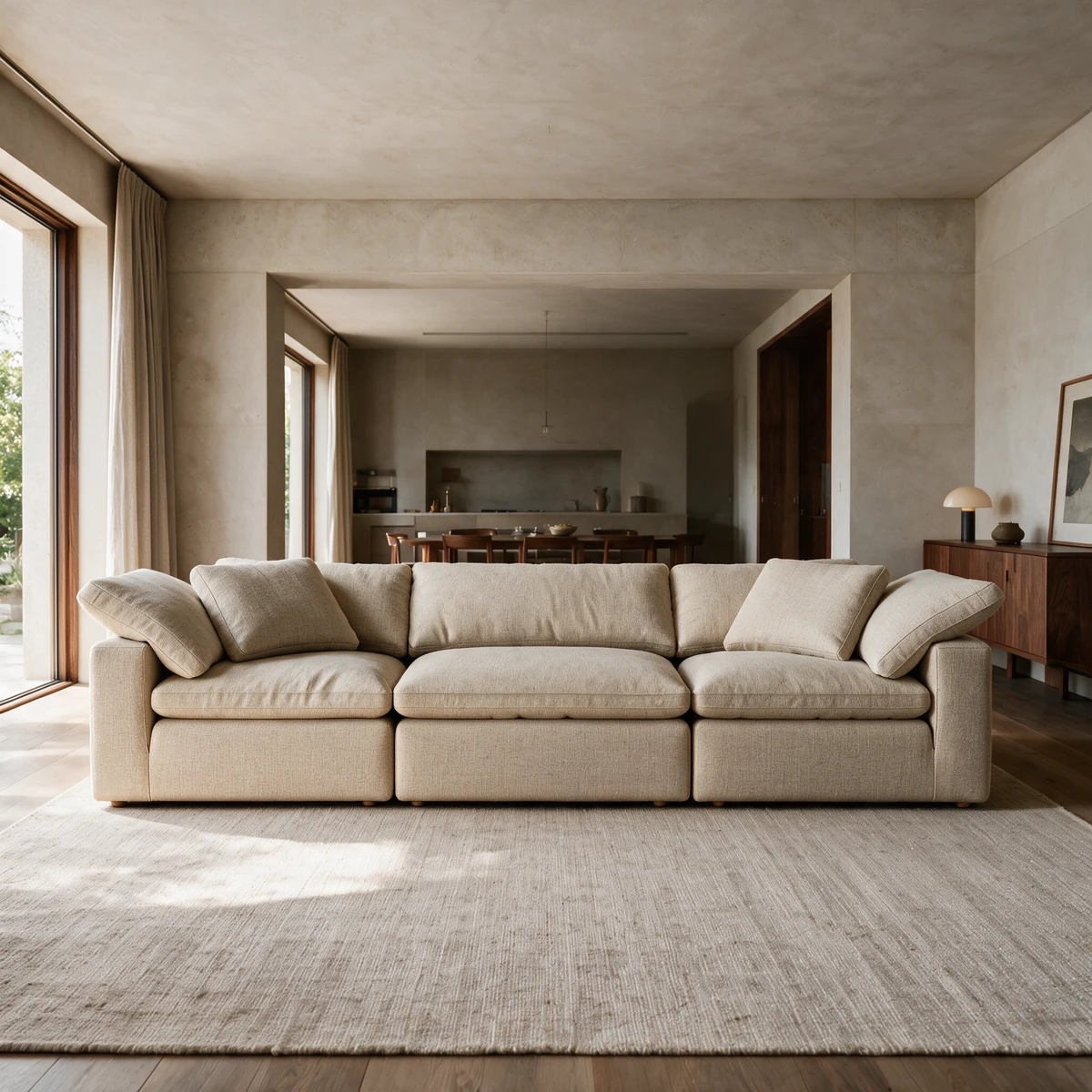
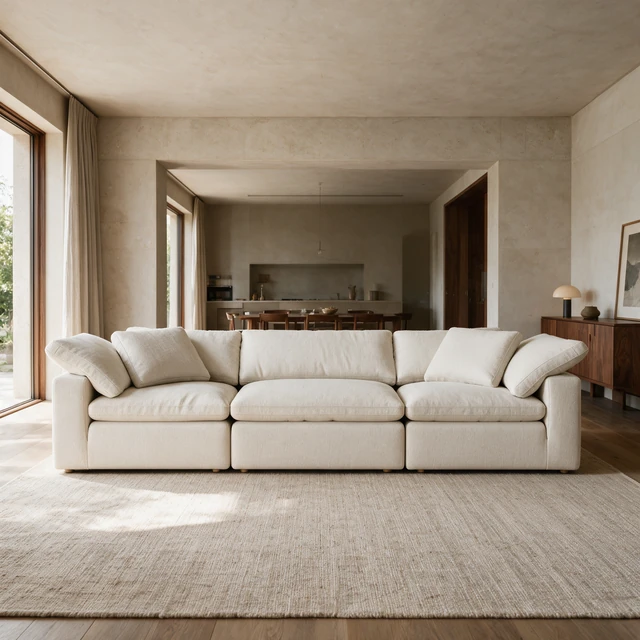
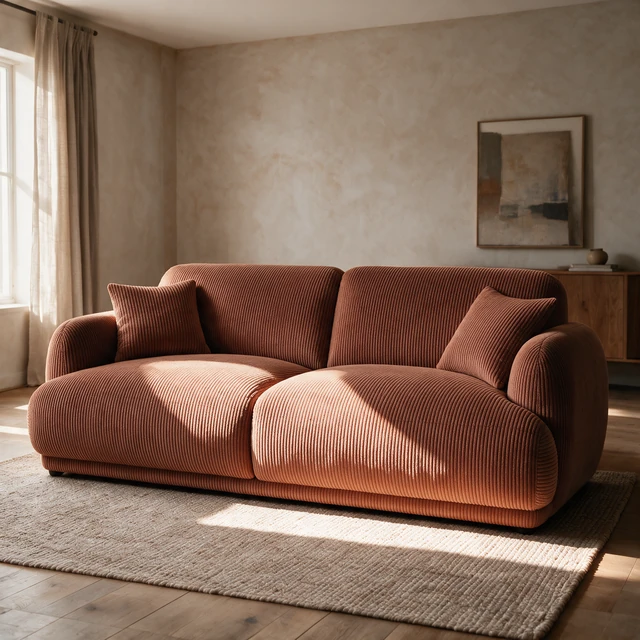
Colour matters too. Light, warm neutrals such as Chalk, Biscuit, Ivory and Ecru show fading much less, because there is less colour to lose and the change blends in. Deep, saturated colours such as Forest, Terracotta and Dark Navy show it sooner, especially as a contrast between the sunny side and the shaded side. On pile fabrics such as corduroy, the tips of the pile face the light and can lighten first, like a soft bleaching along the top of the ribs. Our fabrics page notes how each of our fabrics behaves near big windows.
Where to place a sofa in a room with big windows
- Choose a shaded spot. Place the sofa where the direct afternoon sun does not land, even if it means rethinking the layout.
- Side-on often beats facing the glass. A sofa set at right angles to the window gets less direct sun on its seat than one facing it.
- Back to the window, with care. A sofa with its back to the glass protects the seat, but the top of the back and the back cushions take the light. Leave a gap and use a sheer curtain.
- Light colours near glass, deep colours further in. Keep a Forest, Terracotta or Dark Navy sofa on an inner wall.
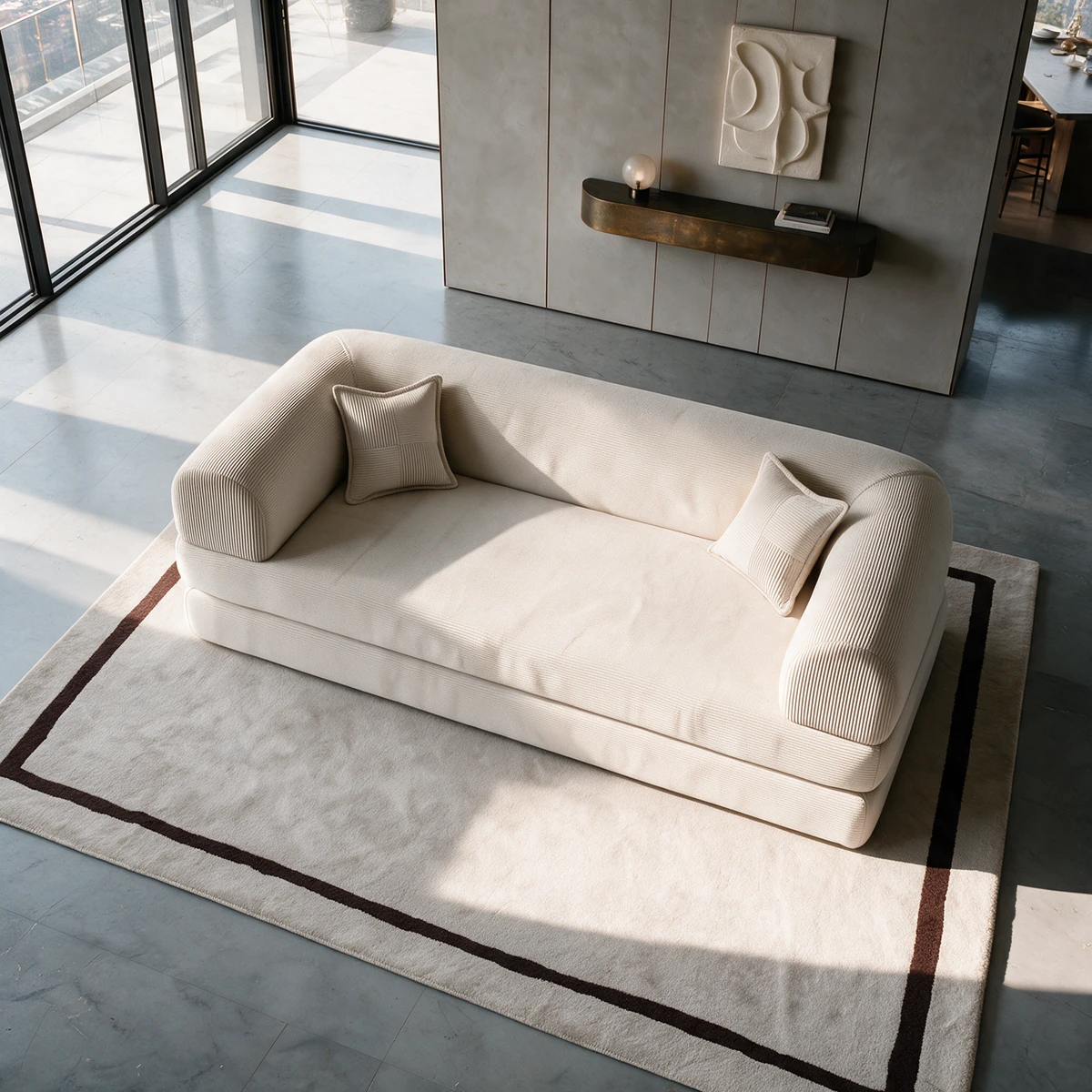
On each sofa page, the "Will it fit?" tool draws the sofa to scale against your wall, which helps you test a shaded spot before you order. A compact sofa bed such as Snoozo, 190 cm wide, fits many walls away from the window where a large corner sofa would not.
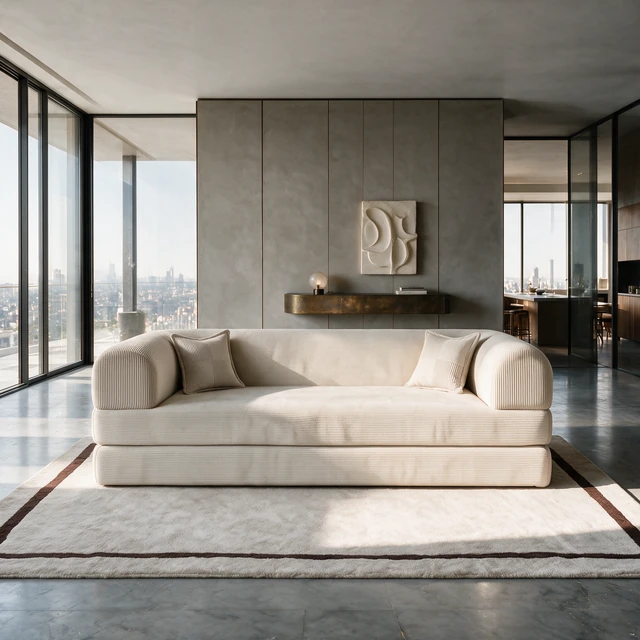
Snoozo is a low sofa bed in fine corduroy, 190 cm wide, and in Ecru it shows sun fading far less than deep shades. From AED 3,890.
From AED 3,890 · delivered and installedSimple ways to protect a sofa from the sun
- Sheer curtains soften the light all day and still let you enjoy the view.
- Blinds or heavier curtains during the strongest hours, especially on west-facing glass after lunch.
- UV-filtering window film. Many films filter out most UV, but visible light still fades fabric slowly, so they reduce fading rather than stop it. In an apartment, check what your building allows.
- A throw on the exposed side. Fold it over the arm or seat nearest the window, and move it from time to time.
- Rotate and swap cushions every few weeks if they lift out, so they age evenly.
Keep the room cool too: heat speeds up fading, and an air-conditioned room is kinder to fabric than a sun-baked one.
What to do if your sofa has already faded
Fading cannot be reversed: once the dye has broken down, no cleaning will bring it back. You can, however, make it far less visible.
- Swap cushions so faded and bright ones mix, and the difference reads as texture rather than damage.
- Move the sofa out of the sun so the fading stops where it is.
- Use a throw in a related colour over the most faded area.
- For a sofa with a sound frame and good foam, reupholstering is a sensible option.
Leave home dyes and fabric paints aside: on upholstery the result is rarely even and can rub off on clothes. Our guide to desert colours for your living room shows how lighter shades help a sunny room.
Questions, answered
Does window glass stop a sofa from fading?
Only partly. Standard glass blocks most UVB but lets through much of the UVA and nearly all visible light, which both fade dyes. UV-filtering film or low-emissivity glass reduces fading further, but keeping the sofa out of direct sun still matters most.
How long does it take for a sofa to fade in the sun?
There is no fixed time. It depends on the light fastness grade, the fibre, the colour and how many hours of direct sun reach the sofa. A low-grade fabric in daily direct sun can show a change within months, while a grade 6 fabric kept out of direct sun keeps its colour for many years.
Do light or dark sofas fade more?
Both lose dye, but dark and saturated colours show it more, because the contrast between faded and unfaded areas is stronger. Light neutrals such as sand, stone or soft grey hide fading best, which makes them a good choice near big windows.
Should I keep my curtains closed all day?
You do not need to live in the dark. Sheer curtains through the day, with blinds or heavier curtains during the strongest sun, usually the afternoon on west-facing windows, protect the sofa while keeping the room bright.
Can I put an indoor sofa on a covered balcony or terrace?
It is best not to. Even under cover, a balcony in the UAE gets reflected sun, heat, humidity and much more dust than a living room, and indoor fabrics are not made for that. Keep indoor sofas inside, and choose furniture made with outdoor fabrics for the balcony.