English
 العربية


Sofa foam explained: density, resilience and cushions that keep their shape
What kg/m³ really tells you, why dense does not mean hard, and how cushions are built to keep their shape for years.
The short answer
Sofa foam density is the weight of the foam per cubic metre, and it tells you how long a cushion will keep its shape, not how soft it feels. For seat cushions, a common benchmark is high-resilience foam of 35 kg/m³ or more, which springs back quickly and holds its height for years. Firmness is a separate measure, so a dense foam can feel soft and a light foam can feel firm.
| Seat foam to look for | High-resilience, 35 kg/m³ or more |
|---|---|
| What density predicts | Durability, not softness |
| Low-density foam | Often below 25 kg/m³, softens sooner |
| Our two comforts | Cocoon (very soft), Classic (medium) |
In this guide
- What does sofa foam density mean?
- Is foam density the same as firmness?
- Which foam density should a sofa seat have?
- What is high-resilience foam?
- How are sofa cushions built: foam, fibre and feather?
- How to check the foam before you buy
- Cocoon and Classic: soft and medium on the same quality base
- How to keep sofa cushions in shape
What does sofa foam density mean?
Density is the mass of foam in one cubic metre, written as kg/m³. A cubic metre of 35 kg/m³ foam weighs 35 kilograms; the same block at 22 kg/m³ weighs 22. The heavier block simply contains more material and less air.
More material makes a stronger cell structure. Each time you sit down, the tiny cells in the foam are squeezed; each time you stand up, they recover. Denser foam can repeat that cycle many more times before the cell walls break down and the cushion loses height. That is why density is the best single number for predicting how long a seat will stay comfortable, and why it belongs on any serious sofa specification. Our guide to what makes a sofa last puts it alongside the frame, springs and fabric.
Is foam density the same as firmness?
No, and this is the most common confusion in sofa shopping. Density describes how much material is in the foam. Firmness, sometimes called hardness, describes how much force it takes to press the foam down, and it is measured separately, often in newtons.
Foam makers can produce a dense foam that feels soft and a light foam that feels firm. A firm, low-density foam can feel supportive on the first day, then soften quickly at home. A soft, high-density foam feels gentle from the start and stays that way. When you compare sofas, ask for both: the density tells you about durability, the firmness or comfort description tells you about feel.
Which foam density should a sofa seat have?
| Density | Typical use | What to expect |
|---|---|---|
| Below 25 kg/m³ | Budget seats, light-use cushions | Softens and loses height sooner |
| 25 to 30 kg/m³ | Back cushions, occasional seats | Adequate where little weight presses down |
| 30 to 35 kg/m³ | Mid-range seats | A decent life with regular use |
| 35 kg/m³ and more, high-resilience | Quality seat cushions for daily use | Keeps its height and bounce for years |
These are general guidelines used across the furniture trade rather than fixed standards, and exact figures vary between suppliers. For a sofa used every day, 35 kg/m³ or more in the seat is a good benchmark. Back cushions carry far less weight, so lighter foam or fibre is a common choice there.
What is high-resilience foam?
High-resilience foam, often shortened to HR foam, is a polyurethane foam with an irregular, open cell structure. Compared with standard foam of a similar density, it pushes back more the further you sink in, so it feels supportive deep in the seat, and it recovers its shape quickly when you stand up.
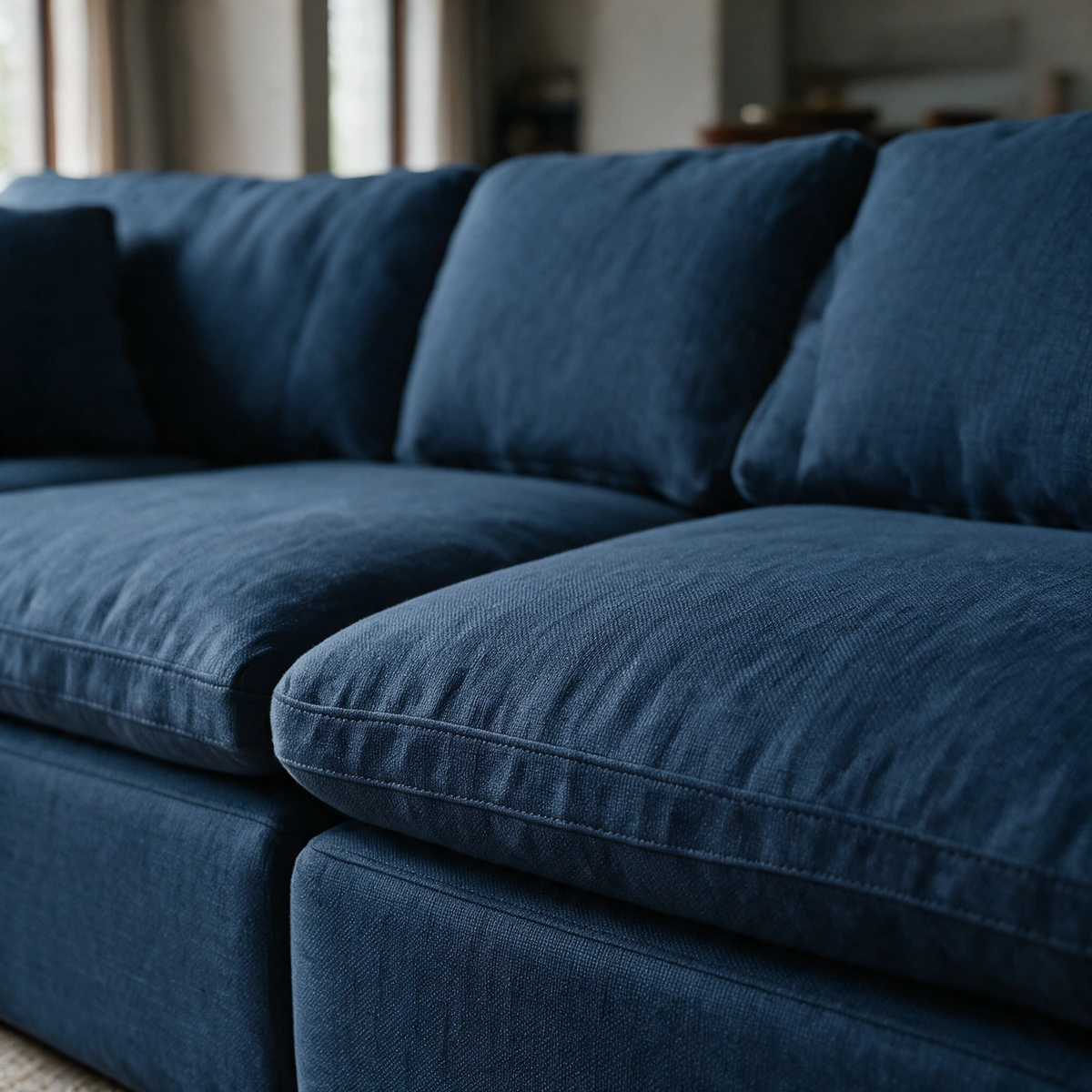
In practice, HR foam usually comes in densities of around 35 kg/m³ and above, which is why the two appear together on good specifications. It is the usual core of a quality seat cushion. Layers on top, such as a softer foam or a fibre wrap, then shape the first feel of the seat, from gently soft to plump and cloud-like.
Memory foam is a different material: it moulds slowly to your body and reacts to warmth. It is common in mattresses but rare in sofa seats, because it is slow to recover when people sit and stand all evening.
How are sofa cushions built: foam, fibre and feather?
| Construction | Feel | Care |
|---|---|---|
| Foam core only | Crisp, even, firm edge | Little care; keeps its shape |
| Foam core wrapped in fibre | Softer first touch, still supportive | Occasional plumping |
| Foam core with a feather and fibre topper | Very soft, sink-in feel | Daily plumping to restore the shape |
| Fibre-filled back cushions | Soft and relaxed | Plump regularly; fibre settles over time |
Most sofas combine them: a supportive foam core for the seat, softer layers for comfort, and fibre or foam and fibre in the back cushions. The softer and looser the top layers, the more plumping the cushions need to look neat. A crisp, tailored sofa usually relies more on foam; a relaxed, slouchy one more on fibre and feather.
How to check the foam before you buy
You rarely see the foam itself, so ask the right questions and look for the signs:
- Ask for the seat foam density in kg/m³. A number is a good sign; vague words such as "premium foam" or "luxury comfort" are not.
- Ask whether it is high-resilience foam, and what is wrapped around it: fibre, a softer foam layer or feather.
- Press the seat with a flat hand if you can reach the sofa. Good foam pushes back evenly and recovers within a second or two; poor foam feels hollow or slow to spring back.
- Look at the front edge of the seat. A crisp, full edge that does not slump when you sit on it shows a well-shaped foam block.
- Check the back cushion filling, since loose fibre needs more plumping than a foam core.
Online, the same questions work: a seller who knows the density and the construction of the cushions has usually chosen them with care. To find out how each of our sofas feels, ask us on WhatsApp.
Cocoon and Classic: soft and medium on the same quality base
On every Pufflo sofa you choose the seat comfort, at the same price. Cocoon is very soft: you sink in. Classic is the medium feel most sofas have: you sit on it and get up easily. Both are made with the same care, so a softer feel is simply a matter of taste.
Comfo and Nuage start in Cocoon; Brioche, Snoozo and Doudou start in Classic, and you can choose the other comfort on any of them. To decide which suits you, read soft or firm sofa.

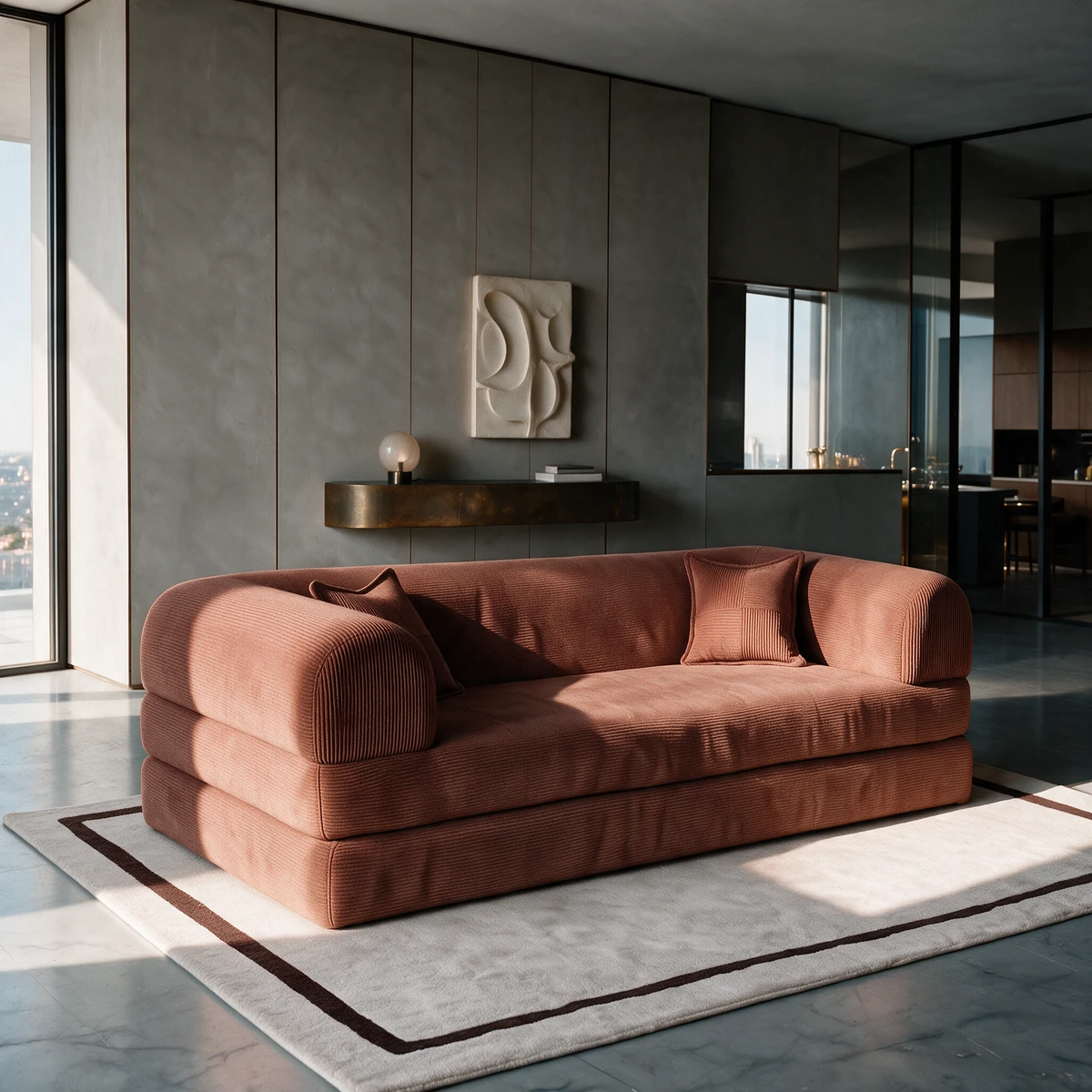
Snoozo is a low, relaxed sofa bed in fine corduroy, with a 65 cm deep seat that starts in Classic, for those who like to sit up and settle in.
From AED 6,790 · delivered and installedHow to keep sofa cushions in shape
- Plump back cushions every few days, pushing the filling back towards the corners.
- Turn and swap loose seat cushions every week or two, if your sofa has them, so the wear is shared.
- Sit in different places. The favourite corner always wears first.
- Keep cushions out of strong sun. UV light fades fabric and, over time, ages the foam behind it.
- Do not stand or jump on the seat. Concentrated weight crushes foam cells far faster than sitting.
On any sofa, the seat settles gently in the first weeks as the foam and its wrapping adapt to the way you sit, then holds that comfort. A common rule is to look for seat foam of 35 kg/m³ or more, which keeps its shape beautifully with daily use. For a complete routine, see our sofa care routine.
Questions, answered
What is a good foam density for a sofa?
For seat cushions used every day, a common benchmark is high-resilience foam of 35 kg/m³ or more. Back cushions carry less weight and can use lighter foam or fibre filling.
Does higher density foam mean a firmer sofa?
No. Density measures how much material the foam contains, which mostly affects durability. Firmness is a separate property, so a dense foam can feel soft and a light foam can feel firm.
How long does sofa foam last?
It depends on the density, the type of foam and how the sofa is used. Low-density foam can flatten noticeably within a few years of daily use, while high-resilience foam of 35 kg/m³ or more keeps its height and bounce for much longer.
Why are my sofa cushions going flat?
Flat cushions usually come from low-density foam breaking down, or from fibre filling that has settled. Plumping and turning the cushions brings fibre back, but foam that has lost its height cannot recover and needs replacing.
Is foam affected by heat in the UAE?
Indoor heat in an air-conditioned home is not a problem for good sofa foam. Strong direct sun is a different matter: over time, UV light ages both the fabric and the foam beneath it, so keep sofas out of direct afternoon sun or draw sheer curtains.