English
 العربية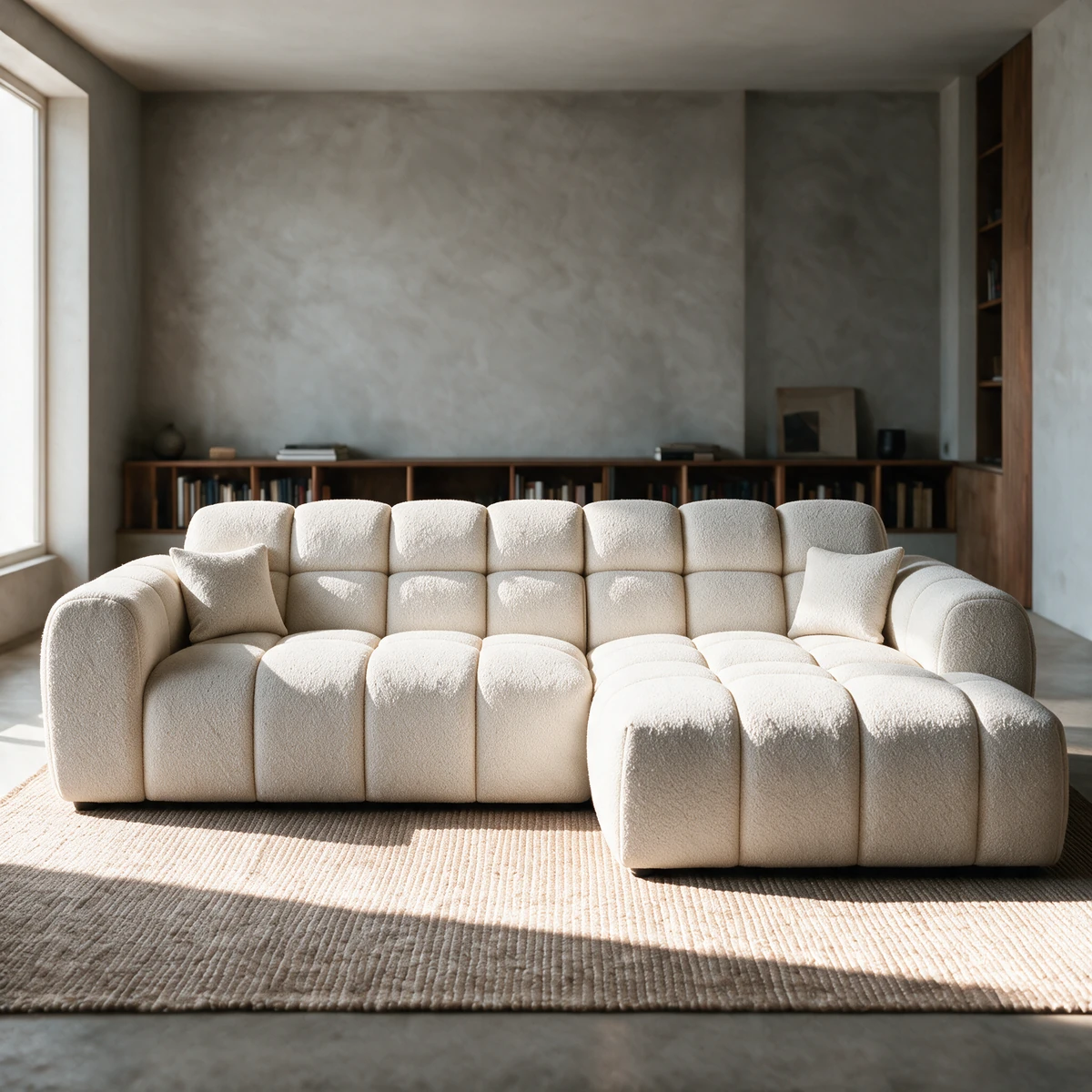

What makes a sofa last: frame, springs, foam and fabric
The four hidden parts that decide whether a sofa still looks and feels good in ten years, and the numbers to ask for before you buy.
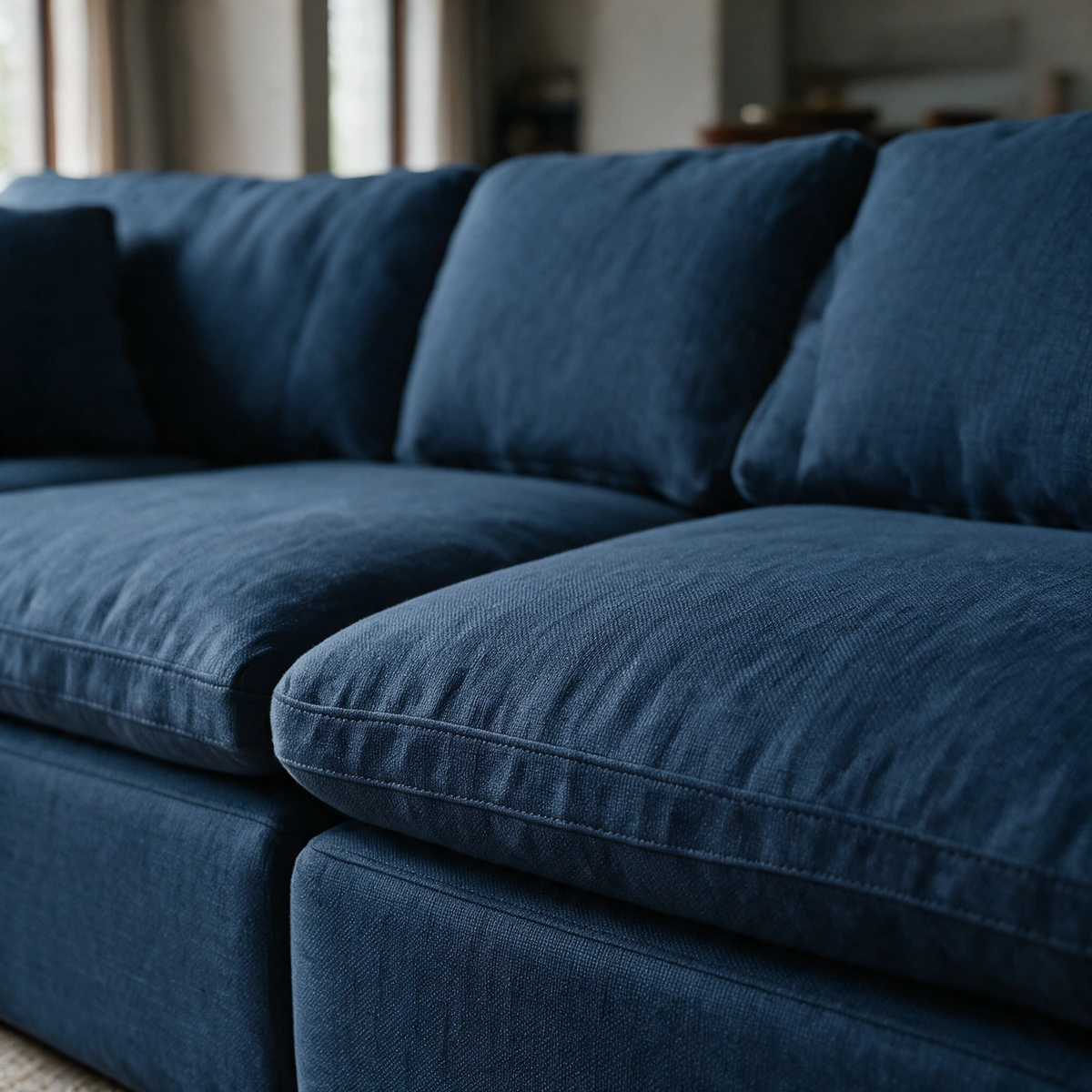
The short answer
A good quality sofa lasts because of four things you cannot see in a photo: a frame of kiln-dried hardwood or quality plywood, glued and screwed with corner blocks; sinuous steel springs; high-resilience seat foam of 35 kg/m³ or more; and a fabric rated over 30,000 Martindale cycles with a pilling grade of 4 or more. Get those right and a sofa used every day can stay comfortable and good-looking for many years.
| Frame | Kiln-dried hardwood or quality plywood |
|---|---|
| Joints | Glued and screwed, with corner blocks |
| Springs | Sinuous steel springs |
| Seat foam | High-resilience, 35 kg/m³ or more |
| Fabric | Over 30,000 Martindale, pilling grade 4 or more |
In this guide
- The frame: what should a sofa be built on?
- Joints and corners: how is the frame held together?
- Springs: what holds you up?
- Seat foam: why density matters
- Fabric: which three grades are worth checking?
- Back cushions and arms: the parts people forget
- Which small details reveal a well-made sofa?
- How can you help a good sofa last even longer?
The frame: what should a sofa be built on?
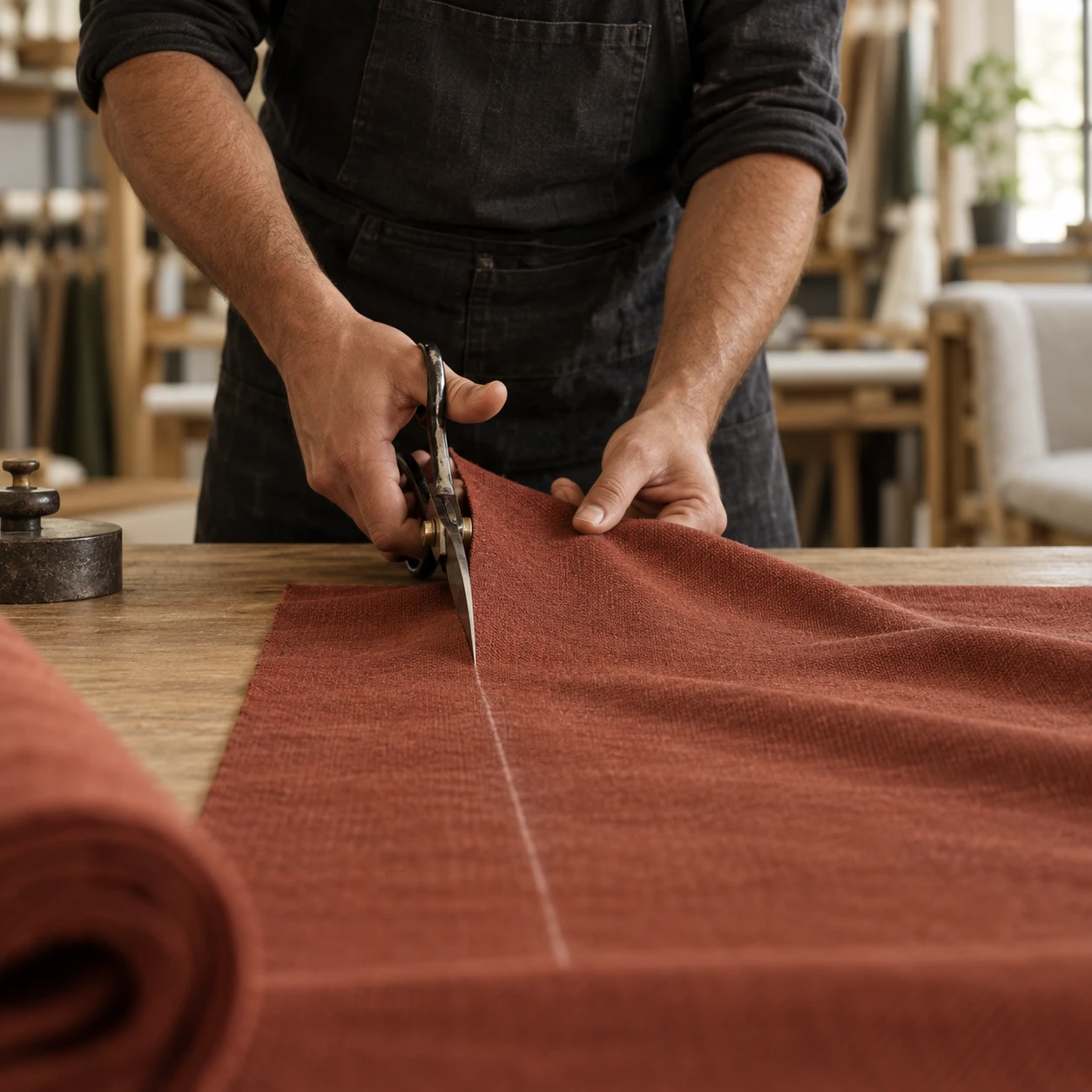
The frame is the skeleton, and it decides how long everything else lasts. Look for kiln-dried hardwood or quality multi-layer plywood. Kiln drying removes most of the moisture from the timber before it is cut, so the frame does not twist, shrink or crack later. That matters in the UAE, where indoor air swings between humid days and the dry chill of air conditioning.
Plywood is made of thin layers glued with the grain crossing, which makes it strong and stable for its weight. What to avoid in the structure: particleboard, thin fibreboard and undried softwood. They can work loose or split under the daily load of people dropping onto the seat.
Joints and corners: how is the frame held together?
A frame is only as strong as its joints. In a well-made sofa, the parts are glued and screwed, or glued and dowelled, and each corner is reinforced with a corner block: a small piece of wood glued and screwed across the inside of the joint. Staples are fine for holding fabric, not for holding a frame together.
A quick test on any sofa you can reach: raise one front corner about 10 cm off the floor. On a rigid frame, the other front foot leaves the floor almost at once. If it stays down while the frame twists, the joints are weak, and they will loosen further with use.
Springs: what holds you up?
Under the seat foam sits the suspension. The three common types, from simplest to most traditional:
| Suspension | How it works | What to know |
|---|---|---|
| Elastic webbing alone | Stretched straps across the seat | Light and low cost; can lose tension and sag sooner |
| Sinuous springs | S-shaped steel springs running front to back, clipped to the frame | The reliable standard: even support, durable, low profile |
| Pocket or hand-tied coils | Individual coil springs | Found on some traditional and high-end sofas, with deeper frames |
Sinuous springs are the reliable choice. On any sofa, check that they are closely spaced and held with clips, and that the seat does not dip in the centre when you press it firmly with your hand.
Seat foam: why density matters
Foam is the part that wears first, so it is worth asking about. Foam density, given in kilograms per cubic metre, tells you how much material is in each block. More material means the foam keeps its height and spring for longer. It does not tell you how soft the seat feels: that is a separate measure of firmness.
For seat cushions, look for high-resilience foam of 35 kg/m³ or more. High-resilience foam has an open, irregular cell structure that springs back quickly after you stand up. Lower-density foams are common in budget furniture and tend to soften and lose height sooner, which shows as dips where people sit most. Our sofa foam guide goes deeper into density and resilience.
Fabric: which three grades are worth checking?
Fabric is what you see and touch every day, and three lab grades tell you how it will age:
| Grade | What it measures | Look for |
|---|---|---|
| Martindale abrasion | Rubbing cycles a fabric survives before it wears | Over 30,000 for family use |
| Pilling | How easily small balls of fibre form, from 1 (heavy) to 5 (none) | Grade 4 or more |
| Light fastness | Resistance to fading in light, on a scale of 1 to 8 | Grade 6 for sunny rooms |
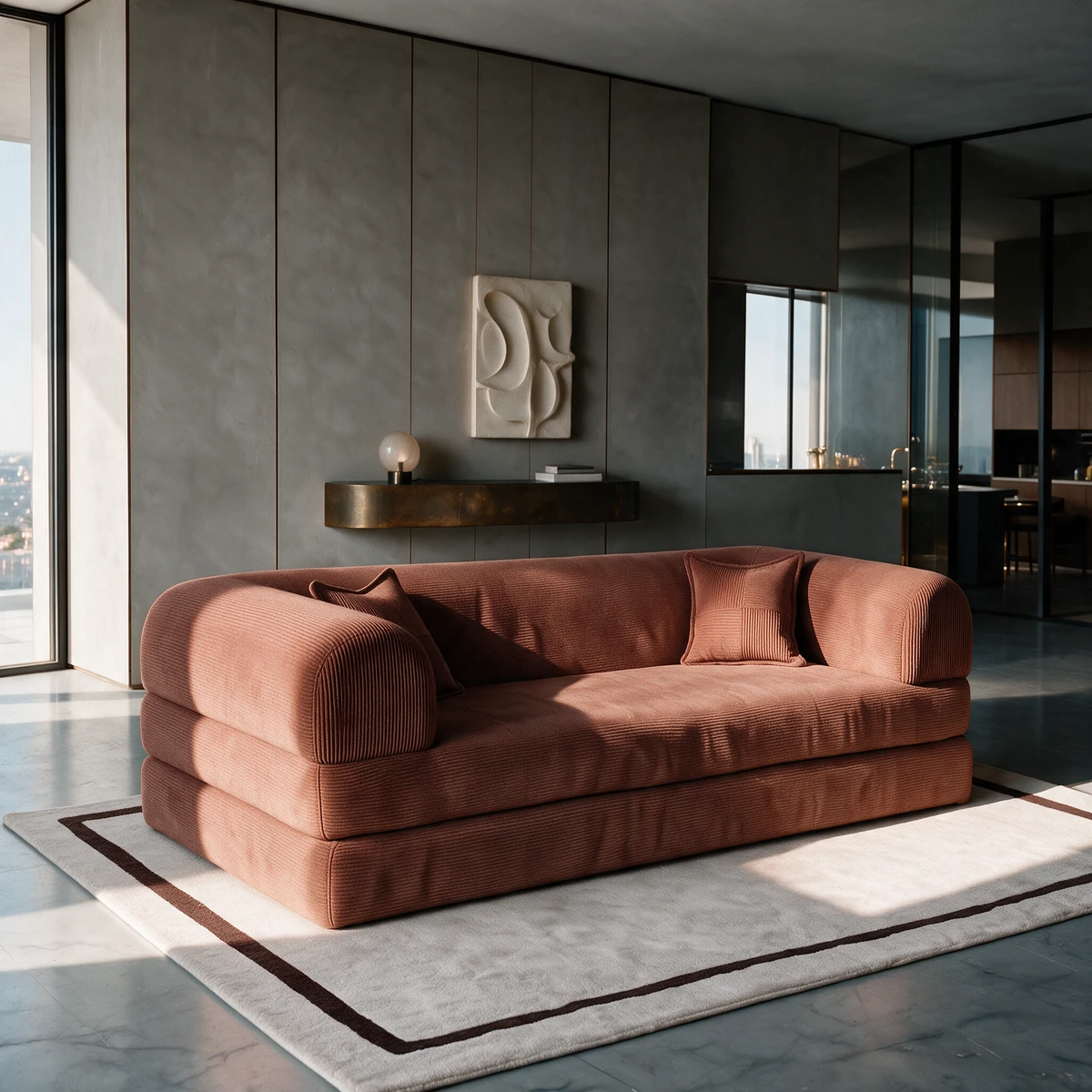
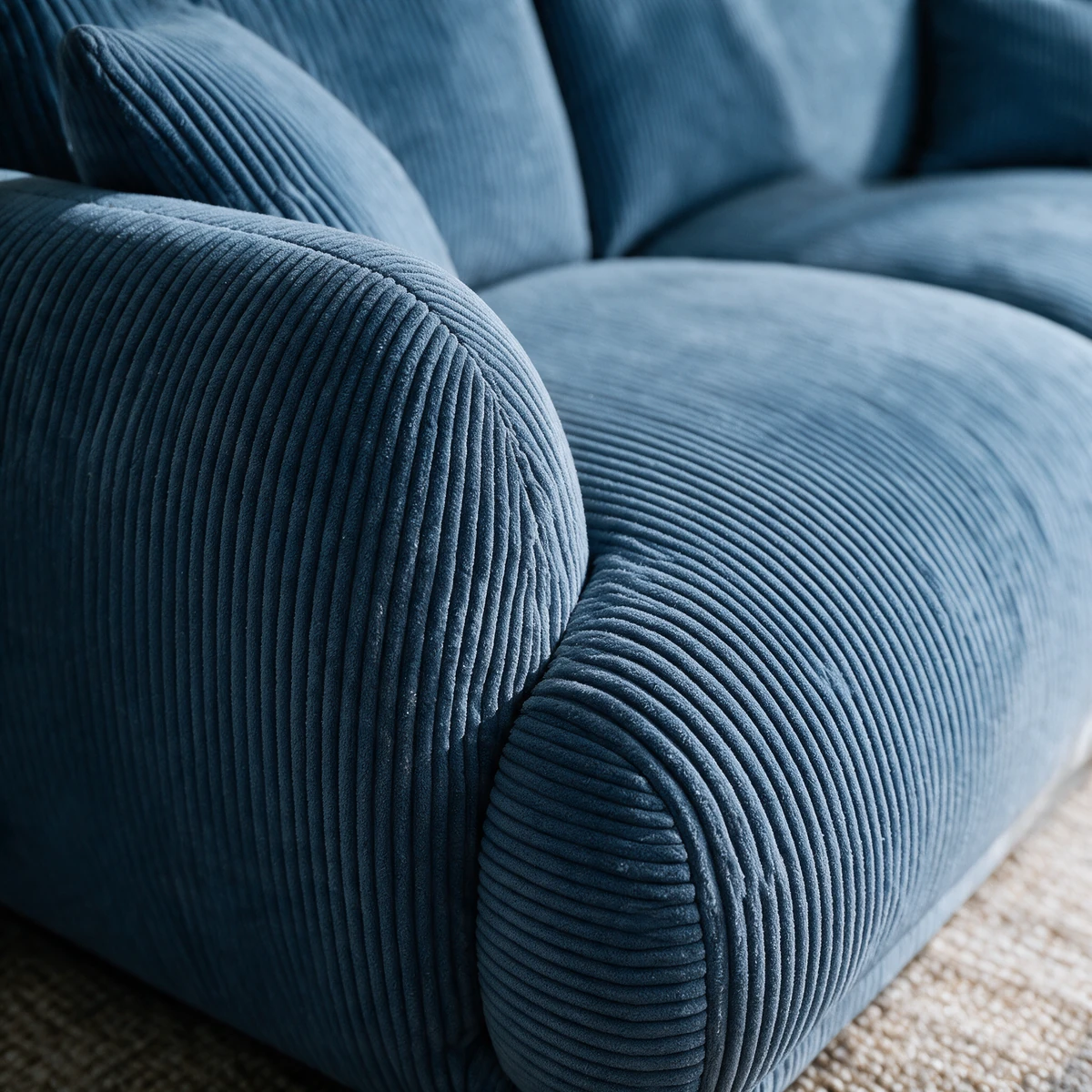
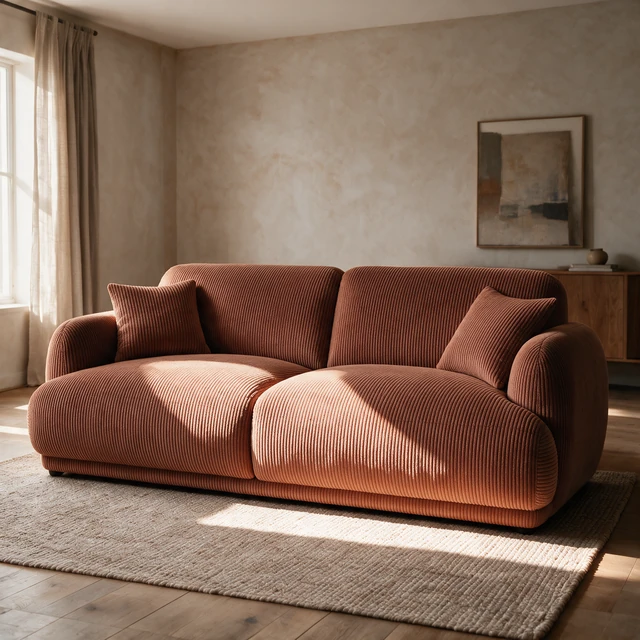
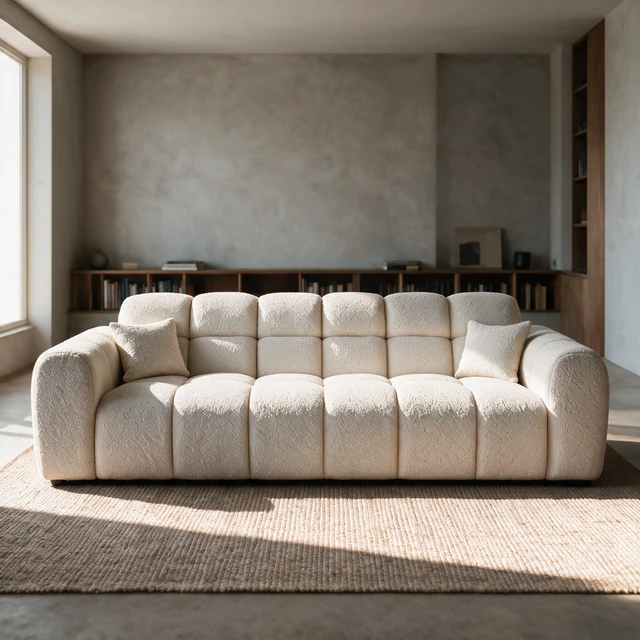
Each fabric also ages in its own way, and a little care keeps it fresh. Bouclé can form light pilling where you sit most, which a fabric shaver lifts. Corduroy pile can show soft shading where you sit, which a soft brush lifts. A smooth, tight weave changes least of all. More on reading the labels in Martindale, pilling and light fastness.
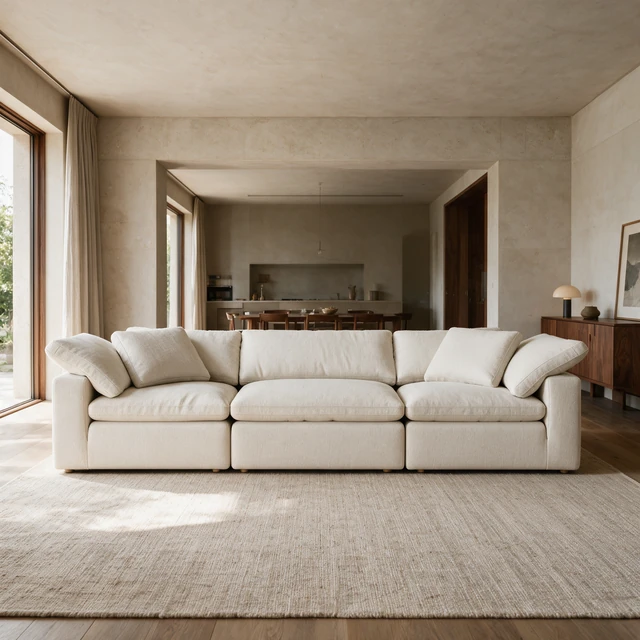
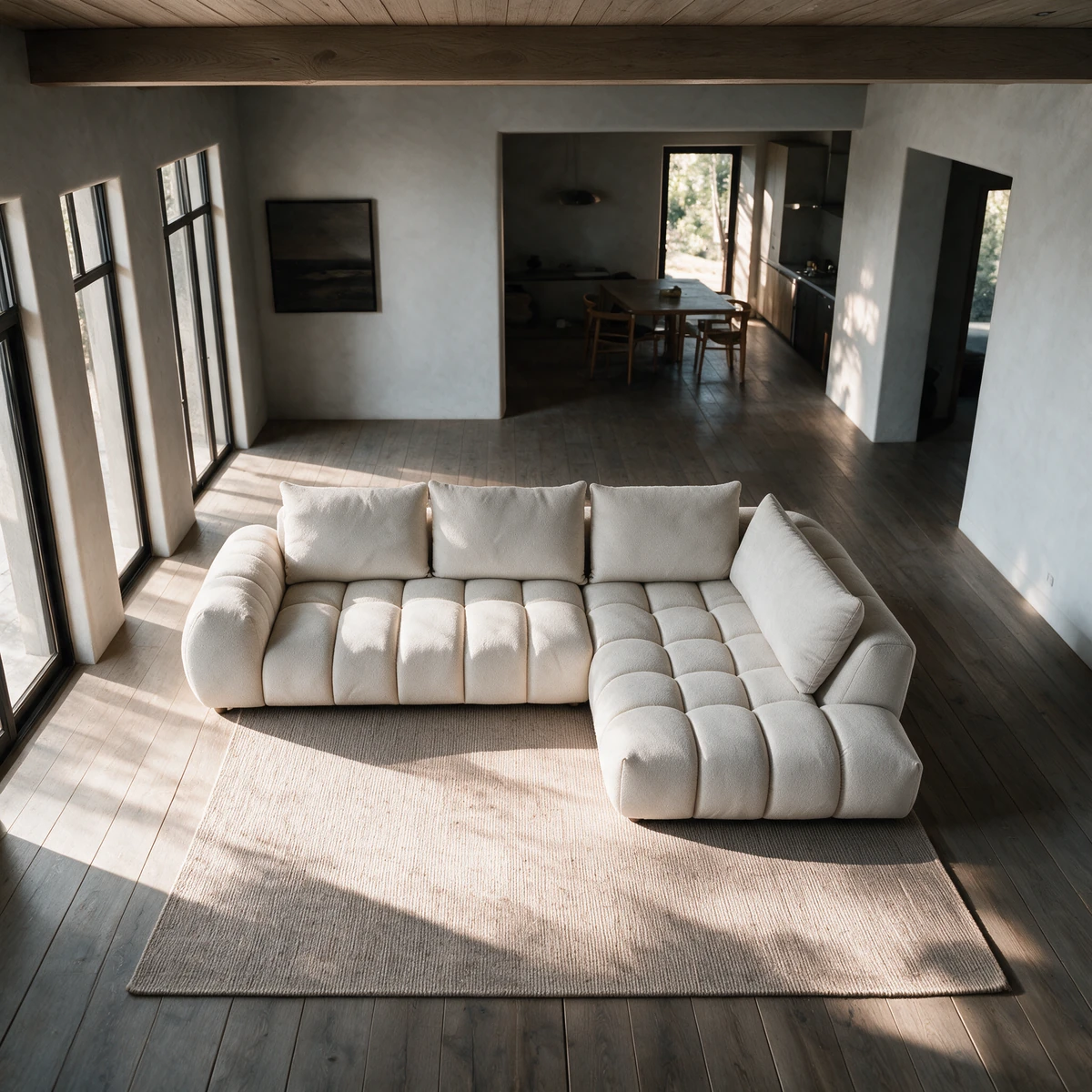
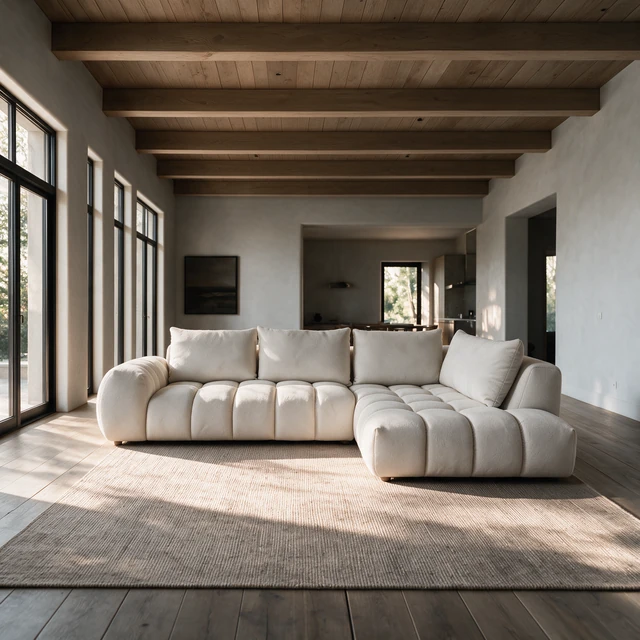
Comfo is made for long family evenings: the fully modular sofa, with deep 74 cm seats and modules you can separate, join and rearrange as your home changes.
From AED 7,490 · delivered and installedBack cushions and arms: the parts people forget
Seats get all the attention, but back cushions and arms decide how a sofa looks after a few years. Back cushions are often filled with loose fibre, which feels soft and relaxed but settles over time; a back cushion with a foam core, or fibre held in separate channels, keeps its shape better and needs less plumping. Either way, a cushion that is plumped regularly ages far better than one that is never touched.
Arms take more knocks than any other part: people lean on them, sit on them and rest plates on them. On a well-made sofa, the frame edge is padded with foam and wadding, so you never feel the wood through the fabric, and the fabric is pulled tight with no folds that will wear through. Press the top and the front of the arm firmly: it should feel firm and even, with no hard edge.
Which small details reveal a well-made sofa?
- Straight, even seams, and piping that runs true along the edges.
- Ribs and patterns that line up across cushions and panels, which is especially visible on corduroy.
- Fabric pulled evenly, with no puckering at the corners or on the arms.
- Cushions that fill their covers, with no loose fabric or hollow corners.
- Solid feet fixed into the frame, not into a thin base board.
- A finished underside, with a dust cover that keeps the inside clean.
None of these alone proves quality, but a sofa that gets the details right is usually built with the same care inside. The reverse is also true: wavy seams and loose fabric on a new sofa rarely sit on a well-built frame.
How can you help a good sofa last even longer?
Even a well-built sofa ages faster in the wrong conditions. A few habits make a real difference in UAE homes:
- Vacuum the seat and the gaps between cushions weekly with a soft brush attachment, to remove the fine sand that rubs against fibres every time someone sits.
- Keep the sofa out of direct afternoon sun, or draw sheer curtains, to protect both the fabric colour and the foam behind it.
- Sit in different places and plump back cushions, so the seat wears evenly.
- Do not sit on the arms or the back, which are not built to carry a person's full weight.
- Lift the sofa to move it rather than dragging it, which strains the joints and the feet.
Our guide to cleaning a sofa in the UAE covers the routine in detail.
Questions, answered
How can I tell if a sofa is good quality when buying online?
Look for named materials: the frame timber, the type of springs, the seat foam density in kg/m³, and the fabric's Martindale, pilling and light fastness grades. Full dimensions, including seat depth and height, are another sign of a seller who knows the product.
What is the first part of a sofa to wear out?
Usually the seat foam, which softens and loses height where people sit most. Dense high-resilience foam of 35 kg/m³ or more slows this down a lot, and sitting in different places helps the seat wear evenly.
Does the frame or the fabric matter more?
Both, in different ways. A weak frame cannot be put right at a sensible cost, while tired foam or worn fabric can often be renewed by an upholsterer. If you have to prioritise, choose the frame and the seat foam first, then the most durable fabric your budget allows.
Is a heavier sofa better quality?
Often, but not always. Weight usually comes from a solid hardwood or plywood frame and dense foam, both good signs. A heavy sofa can still have weak joints, so check the construction rather than relying on weight alone.
What does kiln-dried wood mean?
It is timber dried in a heated chamber to remove most of its moisture before it is cut. Kiln-dried wood is stable, so a frame made from it is far less likely to warp, shrink or crack as temperature and humidity change.